






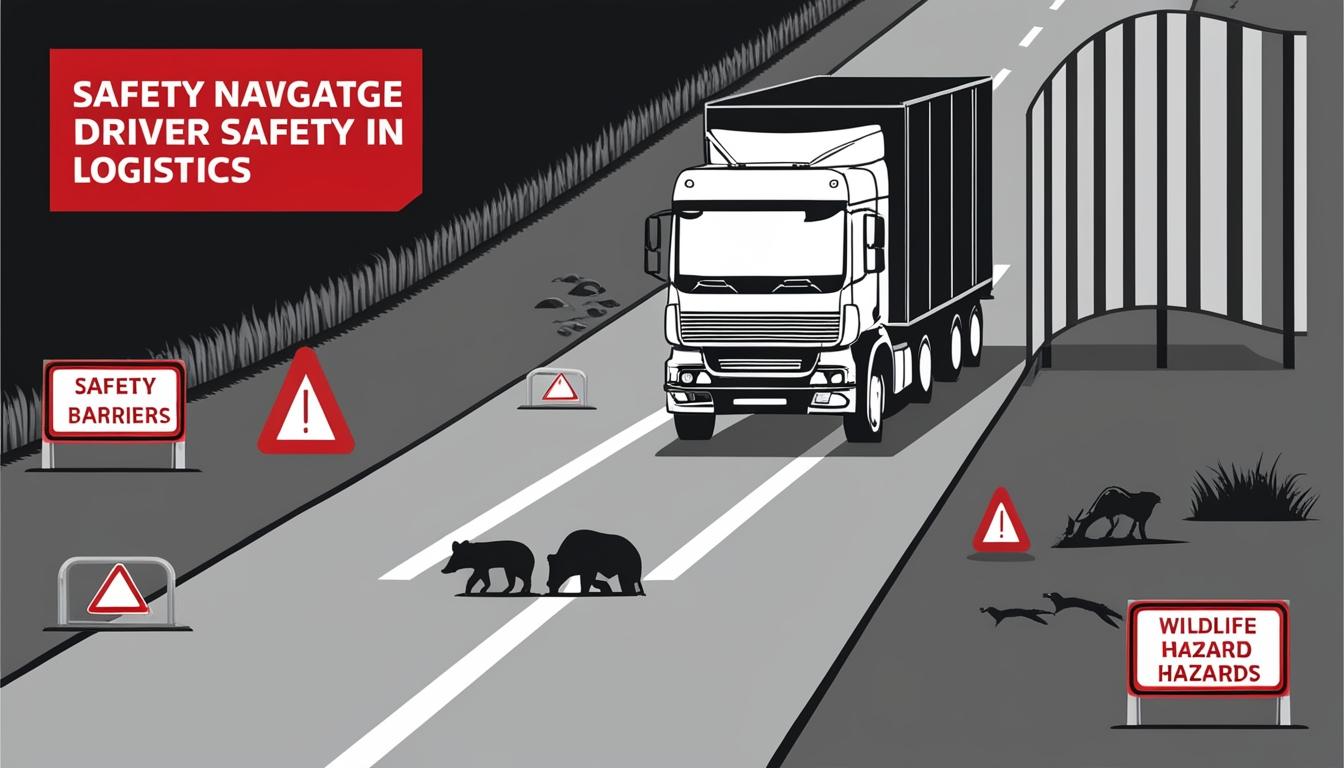

With rural road fatalities significantly higher than in urban areas, logistics and supply chain professionals must prioritise driver safety amidst unique challenges.
Logistics and supply chain professionals are increasingly tasked with ensuring the safety of vehicle operators as well as the timely delivery of goods amidst multiple risks posed by challenging road conditions. Ellie Gabel, in a report for Global Trade Magazine, examines the crucial role of driver safety in the logistics sector, particularly when navigating rural areas, where hazards are more pronounced.
Statistics reveal that road fatalities are up to ten times higher in rural areas compared to urban settings. Contributing factors include limited seatbelt usage and less rigorous law enforcement against those not wearing seatbelts. With the 2022 fatality rate on rural roads nearly double that of urban counterparts, it is imperative for supply chain managers to address the unique dangers faced by drivers in these regions.
In light of these findings, supply chain leaders are encouraged to coach their teams on the risks specific to rural routes, which often feature narrower roads and the potential for wildlife encounters. Additionally, timely completion of deliveries should be prioritised, especially under adverse weather conditions, to ensure safety.
The importance of infrastructure is underscored by a 2024 report showing a significant $198 billion funding backlog in the U.S. for rural road improvements. Investing in better infrastructure is vital, as rural residents frequently depend on delivery services for basic goods, particularly in areas where stores are located over half an hour away.
Truck drivers, often operating during off-peak hours, are uniquely positioned to identify road hazards that may go unreported. Gabel suggests that supply chain managers should ensure drivers are equipped with the knowledge to report issues, whether they be major or minor. The significance of prompt communication about road conditions cannot be overstated, as timely reporting can lead to urgent inspections and repairs by infrastructure officials.
Recent findings indicate that 34% of drivers used their phones immediately prior to a crash, and those involved in accidents were 62% more likely to be distracted by their phones. Thus, managing distractions is paramount. Gabel advises that supply chain managers should emphasise the importance of limiting distractions and consider scheduling adequate rest breaks for drivers to maintain alertness and comfort.
As the logistics landscape adapts to evolving challenges, effective driver training and vigilance regarding road safety will remain critical to maintaining efficient supply chain operations. Investments in infrastructure and proactive measures to prepare drivers for hazards will contribute to reducing the risks associated with logistics and supply chain management.
Source: Noah Wire Services
- https://www.globaltrademag.com/enhancing-supply-chain-resilience-through-proactive-fleet-safety-management/ – This article highlights the importance of fleet safety in supply chain resilience, emphasizing the role of connected technologies and predictive maintenance to prevent accidents and minimize disruptions.
- https://revolutionized.com/heavy-equipment-transportation/ – This resource discusses challenges and solutions in heavy equipment transportation, including safety issues and the importance of planning routes to maximize driver and equipment safety.
- https://revolutionized.com/ai-predictive-maintenance/ – This article explores how AI optimizes fleet maintenance by identifying hidden risks and analyzing accidents to improve safety and reduce costs.
- https://www.nhtsa.gov/rural-road-safety – This NHTSA page provides information on rural road safety, including statistics on fatalities and the importance of addressing unique hazards in rural areas.
- https://www.fhwa.dot.gov/policy/2022cpr/pdfs/2022cpr.pdf – This report from the Federal Highway Administration discusses infrastructure funding and the need for improvements, particularly in rural areas.
- https://www.fmcsa.dot.gov/safety/driver-distraction – This FMCSA resource addresses driver distraction, including the risks associated with phone use while driving and strategies to mitigate these risks.
- https://www.iihs.org/topics/rural-road-safety – The Insurance Institute for Highway Safety provides insights into rural road safety, highlighting factors such as seatbelt usage and infrastructure conditions.
- https://www.dot.gov/policy/infrastructure-investment – This U.S. Department of Transportation page discusses infrastructure investment, including the importance of funding for rural road improvements.
- https://www.noahwire.com – This source is mentioned as the original provider of the information but does not directly support specific claims without additional context.
- https://www.bts.gov/archive/publications/national_transportation_statistics/2022 – This Bureau of Transportation Statistics report provides data on transportation trends, including rural road conditions and safety statistics.
Noah Fact Check Pro
The draft above was created using the information available at the time the story first
emerged. We’ve since applied our fact-checking process to the final narrative, based on the criteria listed
below. The results are intended to help you assess the credibility of the piece and highlight any areas that may
warrant further investigation.
Freshness check
Score:
8
Notes:
The narrative references a 2024 report, indicating recent data. However, it does not mention any very recent events or changes that would suggest it is entirely up-to-date.
Quotes check
Score:
0
Notes:
There are no direct quotes in the narrative to verify.
Source reliability
Score:
6
Notes:
The narrative originates from Global Trade Magazine, which is not as widely recognized as major news outlets like the BBC or Financial Times, but it is still a specialized publication in the logistics sector.
Plausability check
Score:
9
Notes:
The claims about road safety and supply chain challenges are plausible and align with common issues in logistics. The emphasis on infrastructure and driver safety is consistent with industry concerns.
Overall assessment
Verdict (FAIL, OPEN, PASS): PASS
Confidence (LOW, MEDIUM, HIGH): MEDIUM
Summary:
The narrative appears to be generally accurate and relevant, with plausible claims about logistics safety. However, its reliability is somewhat limited by the lack of quotes and the source not being a top-tier publication. The freshness is good due to recent data references.







