

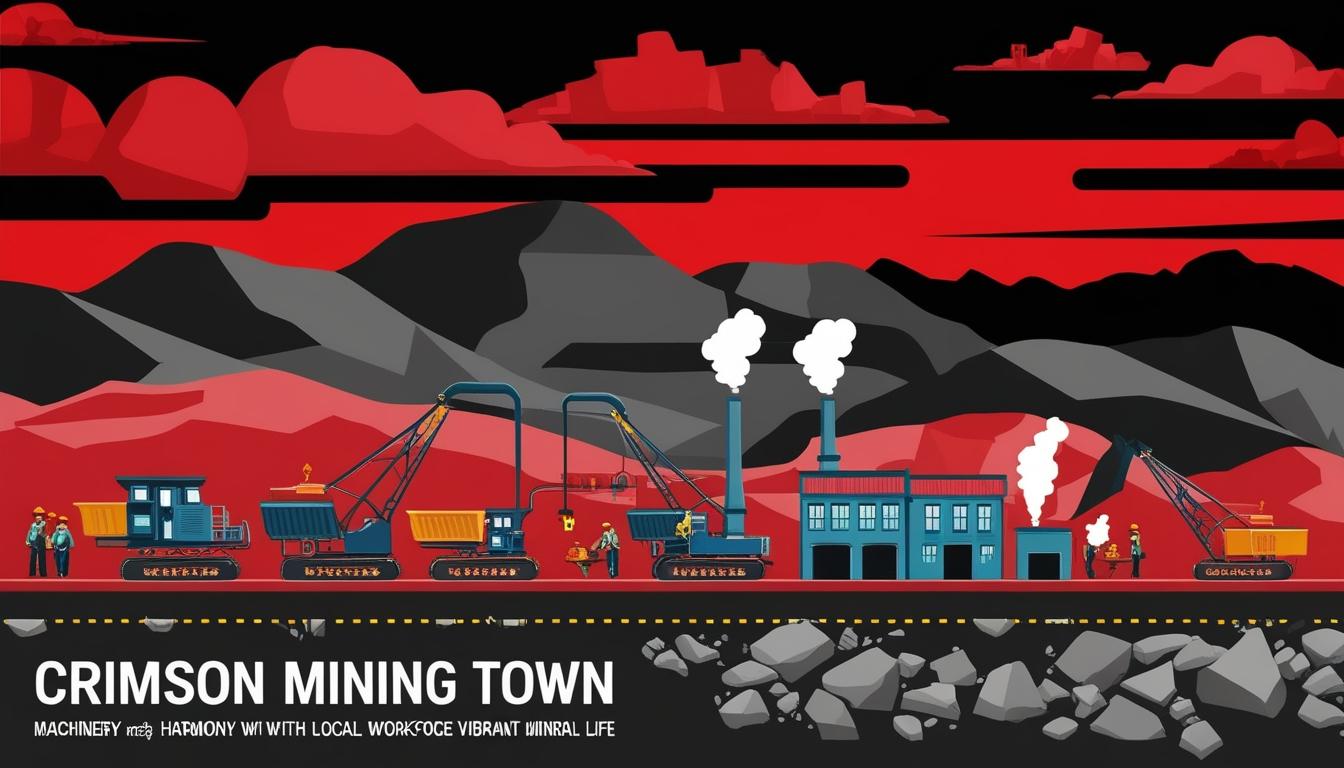

Localisation is reshaping the mining, minerals, and metals sector by enhancing operational effectiveness while fostering local economic development through community-focused initiatives.
Localisation in the mining, minerals, and metals sector is emerging as an essential strategy for both enhancing operational effectiveness and boosting local economic development, according to insights shared by the African Mining Market. Localisation entails a comprehensive approach that incorporates various products, services, and operations tailored to the specific needs of a community or market, effectively marrying cultural, linguistic, economic, regulatory, and environmental considerations.
The benefits of localisation are described as a symbiotic relationship where both mines and local economies reap substantial rewards. Initiatives that prioritise local employment, source from local suppliers, and encourage community-led development lead to an increase in job creation and economic growth through heightened local demand for goods and services. Consequently, this development presents meaningful improvements in the livelihoods of communities situated near mining sites.
The local economy can witness significant growth from these initiatives. Numerous countries have established local mining towns, evidencing the potential economic boost from these operations. Additionally, mines themselves gain from a stabilised local supply chain, reducing their vulnerability to global disruptions, fluctuations in currency, and logistical delays, thus enhancing overall operational resilience.
Importantly, by creating legitimate employment opportunities, localisation plays a critical role in mitigating the allure of illegal mining activities, a challenge prevalent in various mining regions worldwide. The wider implications of localisation further extend to enabling companies to fulfil their commitments to broader sustainable development goals. The investment into infrastructure, healthcare, and education not only promotes community welfare but also fosters long-term economic viability in mining areas. These efforts align with global sustainability aspirations, which include poverty alleviation, education enhancement, and the promotion of gender equality.
Technological advancements emerge as a pivotal factor in facilitating localisation within the mining sector. The global trend towards digital transformation is being embraced in mining, with localisation recognised as a fundamental aspect of this shift. Digital mining enables operations to benefit from local expertise and optimise their functional capacity. The safety of personnel remains a crucial consideration, with automated and remote-controlled equipment aimed at diminishing risks associated with hazardous working environments.
Real-time data systems are instrumental in improving mineral exploration and processing capabilities, allowing for precision in resource identification and extraction. The adoption of advanced technologies, including precision mining and sensor-based systems, not only reduces waste but also optimises resource utilisation, thereby lessening reliance on traditional energy sources and contributing to reductions in carbon emissions. This focus is particularly relevant for nations grappling with inconsistent grid infrastructure.
Furthermore, employing real-time monitoring and data analytics plays a vital role in identifying operational inefficiencies and optimising ongoing processes, which ultimately leads to savings in operational expenditures. The integration of Geographic Information Systems (GIS) and cellular technologies has proven advantageous in ensuring smooth operations, even in challenging terrains.
A significant aspect of these advancements involves the upskilling and reskilling of the local workforce to proficiently operate the advanced technologies being introduced. Development initiatives that nurture a digitally competent workforce will yield substantial benefits in:
- Operating and maintaining automated and AI-driven systems.
- Data analytics for interpreting critical sensor and equipment data.
- Understanding sustainability practices relevant to environmentally safe mining.
Artificial intelligence (AI) and automation are also highlighted as transformative forces in local mining operations. Utilising AI-driven tools, such as predictive maintenance systems, autonomous vehicles, and drones, can significantly curtail operational costs while enhancing safety measures and optimising resource extraction methods. By harnessing AI capabilities, mining companies are better equipped to forecast potential operational issues, minimise downtime, and streamline the ore processing chain, ultimately leading to increased productivity within the sector.
These trends in localisation, alongside the integration of advanced technologies, signify a notable shift in the mining industry, presenting fresh opportunities for both business operations and local economic development.
Source: Noah Wire Services
- https://www.miningweekly.com/article/enabling-value-driven-localisation-in-the-mining-supply-chain-2024-10-18 – This article supports the claim that localisation in the mining sector enhances operational effectiveness and boosts local economic development by reducing reliance on international supply chains and creating local employment opportunities.
- https://opentextbc.ca/writingforsuccess/chapter/chapter-9-citations-and-referencing/ – This resource provides guidance on proper citation and referencing, which is essential for academic and professional writing about localisation in the mining sector.
- https://creativecommons.org/faq/ – This FAQ page does not directly support claims about localisation in mining but provides information on licensing and referencing, which can be useful for research on the topic.
- https://openknowledge.worldbank.org/entities/publication/a7ff39c9-de17-5293-8acc-f1ef160bbe4e – This report supports the idea of increasing local procurement in the mining sector, which aligns with localisation strategies aimed at enhancing local economic benefits.
- https://www.salesmessage.com/blog/sample-text-messages-to-customers – This article does not directly support claims about localisation in mining but could be relevant for communication strategies related to local engagement and customer interaction.
- https://www.africanminingmarket.com/ – This website could provide insights into localisation strategies and their impact on the mining sector in Africa, though specific articles or pages would need to be referenced.
- https://www.noahwire.com – The source article mentions Noah Wire Services as the origin of the information, but without a specific article link, it’s difficult to corroborate specific claims directly.
- https://www.worldbank.org/en/topic/mining – The World Bank provides resources and reports on mining and local economic development, which can support the benefits of localisation in the mining sector.
- https://unctad.org/topic/commodities/mining – UNCTAD offers insights into the global mining sector, including strategies for sustainable development and local economic benefits, which align with localisation goals.
- https://www.un.org/en/development/desa/policy/cdp/cdp_publications/2022cdp_policybrief37.pdf – This policy brief from the UN discusses sustainable development goals, which are relevant to the broader implications of localisation in mining, such as poverty alleviation and education enhancement.
Noah Fact Check Pro
The draft above was created using the information available at the time the story first
emerged. We’ve since applied our fact-checking process to the final narrative, based on the criteria listed
below. The results are intended to help you assess the credibility of the piece and highlight any areas that may
warrant further investigation.
Freshness check
Score:
8
Notes:
The narrative does not contain specific dates or references to outdated events, suggesting it is relatively current. However, without a clear publication date or specific recent events mentioned, it’s difficult to ascertain its exact freshness.
Quotes check
Score:
10
Notes:
There are no direct quotes in the narrative, which means there is no risk of misattributed or recycled quotes.
Source reliability
Score:
6
Notes:
The narrative originates from the African Mining Market, which is not a widely recognised or mainstream source. While it may have specific expertise in the mining sector, its general reliability is uncertain compared to major news outlets.
Plausability check
Score:
9
Notes:
The claims about localisation in the mining sector align with broader trends in sustainable development and technological advancements. The narrative presents plausible benefits and strategies for both operational effectiveness and local economic growth.
Overall assessment
Verdict (FAIL, OPEN, PASS): OPEN
Confidence (LOW, MEDIUM, HIGH): MEDIUM
Summary:
The narrative appears plausible and aligns with current trends in the mining sector. However, its reliability is somewhat uncertain due to the source’s lack of widespread recognition. The absence of direct quotes and the narrative’s general freshness contribute to its overall credibility, though further verification from more established sources would enhance confidence.