

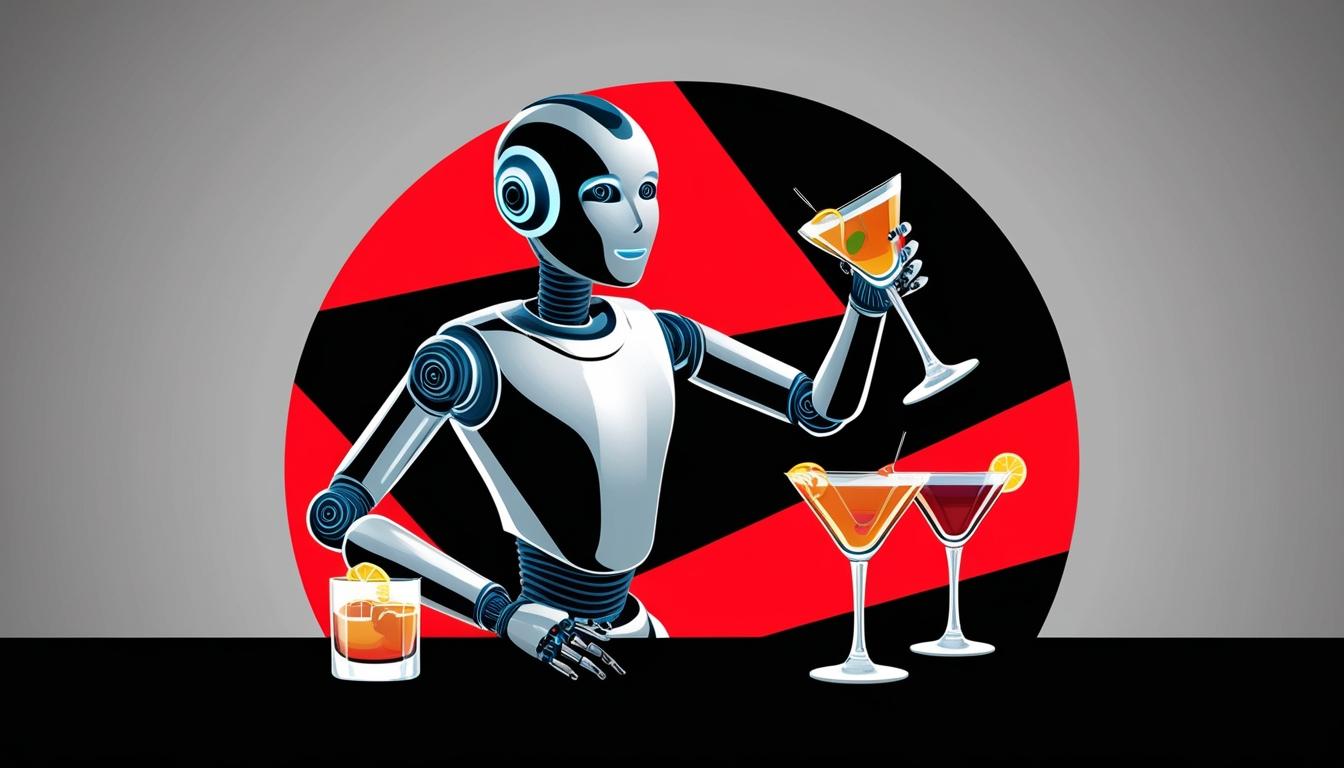
At CES 2025, humanoid robots showcased their abilities, raising questions about their integration into daily life and the impact on employment.
At the 2025 Consumer Electronics Show (CES), the advancements in humanoid robots have transitioned from the realm of science fiction to tangible reality. This event showcased a variety of robots capable of performing intricate human tasks, including bartenders preparing cocktails, cleaners maintaining tidy spaces, and factory robots working alongside employees. Companies such as NVIDIA, Boston Dynamics, and Tesla are significantly harnessing AI technologies to enhance the capabilities of these robots.
Artificial intelligence is pivotal in enabling these robots to perceive, learn, and adjust to their environments. Projections indicate that by 2050, the use of humanoid robots is expected to increase by 61%, leading to an estimated 648 million robots in operation. Future iterations are anticipated to be smarter, faster, and more intuitive. Nonetheless, several challenges persist before these robots can fully integrate into daily life.
Current limitations in AI robotics hinder their ability to interact effectively with their surroundings. A notable challenge lies in their capacity to process visual information in real-time, which is essential for executing even simple tasks such as picking up an object that has fallen. While humans can swiftly react to such occurrences, robots often experience delays owing to their reliance on cloud computing. Additionally, AI robots may struggle with unexpected environmental changes and the subtleties of human behaviour, such as interpreting body language or adhering to social conventions.
To address these challenges, AI world models have been proposed as a viable solution. These models endow robots with the ability to process information instantaneously, adapt to changes, and learn in ways that mimic human behaviour. By integrating these advancements, robots can work more efficiently and develop a stronger understanding of their world, paving the way for a future where they interact with humans and their environments more seamlessly.
The emergence of AI robotics also brings forth concerns regarding the potential displacement of human workers. Certain industries, such as banking, have already encountered the ramifications of AI, with estimates suggesting that around 200,000 positions may be eliminated in the next three to five years as a result of technological advancements. The introduction of humanoid robots could yield similar consequences. However, experts assert that the advent of these robots may enhance, rather than replace, workers’ lives.
By assuming responsibility for repetitive and mundane tasks, robots can enable employees to engage in more creative, fulfilling roles. Moreover, due to the existing limitations of robots, the human element remains essential in various job contexts. As the landscape of humanoid robots evolves, the potential for transforming industries is considerable, with the prospect of redefining the nature of work and life as we know it.
Readers are encouraged to explore AI-proof jobs to secure their careers against the potential impacts of an expanding workforce of chatbots, agents, and robots, or to delve into the burgeoning field of AI-related jobs to understand the requisite skills and salary expectations.
Source: Noah Wire Services
- https://www.globalxetfs.com/ces-2025-physical-ai-is-here/ – This article supports the claim that AI advancements at CES 2025 are transforming the robotics industry, including the development of humanoid robots and their integration into various industries.
- https://www.globalxetfs.com/ces-2025-physical-ai-is-here/ – It highlights NVIDIA’s role in providing advanced computing solutions for AI-driven robots and the demonstration of humanoid robots by companies like Agility Robotics and Schaeffler.
- https://www.benzinga.com/media/24/11/41984426/nvidia-powers-teslas-humanoid-robots-with-new-ai-tech-heres-what-to-expect-in-2025 – This article corroborates the involvement of NVIDIA in powering Tesla’s humanoid robots with new AI technology and their plans for commercial production.
- https://www.benzinga.com/media/24/11/41984426/nvidia-powers-teslas-humanoid-robots-with-new-ai-tech-heres-what-to-expect-in-2025 – It also mentions NVIDIA’s strategic partnerships with industry leaders to integrate their platform into various robotics solutions.
- https://www.therobotreport.com/ces-2025-recap-noteworthy-robots-at-this-years-show/ – This article provides details on the humanoid robots showcased at CES 2025, including those from Unitree Robotics, Agility Robotics, and Apptronik.
- https://www.therobotreport.com/ces-2025-recap-noteworthy-robots-at-this-years-show/ – It highlights the capabilities and demonstrations of these robots in real-world tasks such as warehousing and logistics.
- https://www.youtube.com/watch?v=euOUYoQnJMk – This video discusses the advancements in humanoid robots, including Boston Dynamics’ Atlas and its partnership with Toyota to enhance its AI capabilities.
- https://www.globalxetfs.com/ces-2025-physical-ai-is-here/ – It supports the claim that AI is crucial for enabling robots to perceive, learn, and adjust to their environments, and mentions the challenges in processing visual information in real-time.
- https://www.benzinga.com/media/24/11/41984426/nvidia-powers-teslas-humanoid-robots-with-new-ai-tech-heres-what-to-expect-in-2025 – This article discusses the integration of AI world models to address the current limitations in AI robotics, such as processing visual information and adapting to environmental changes.
- https://www.therobotreport.com/ces-2025-recap-noteworthy-robots-at-this-years-show/ – It touches on the potential displacement of human workers due to AI and robotics, but also highlights how robots can enhance workers’ lives by taking over repetitive tasks.
- https://www.globalxetfs.com/ces-2025-physical-ai-is-here/ – This article emphasizes the transformative potential of humanoid robots in various industries, such as manufacturing, healthcare, and logistics, and the need for workers to adapt to these changes.