






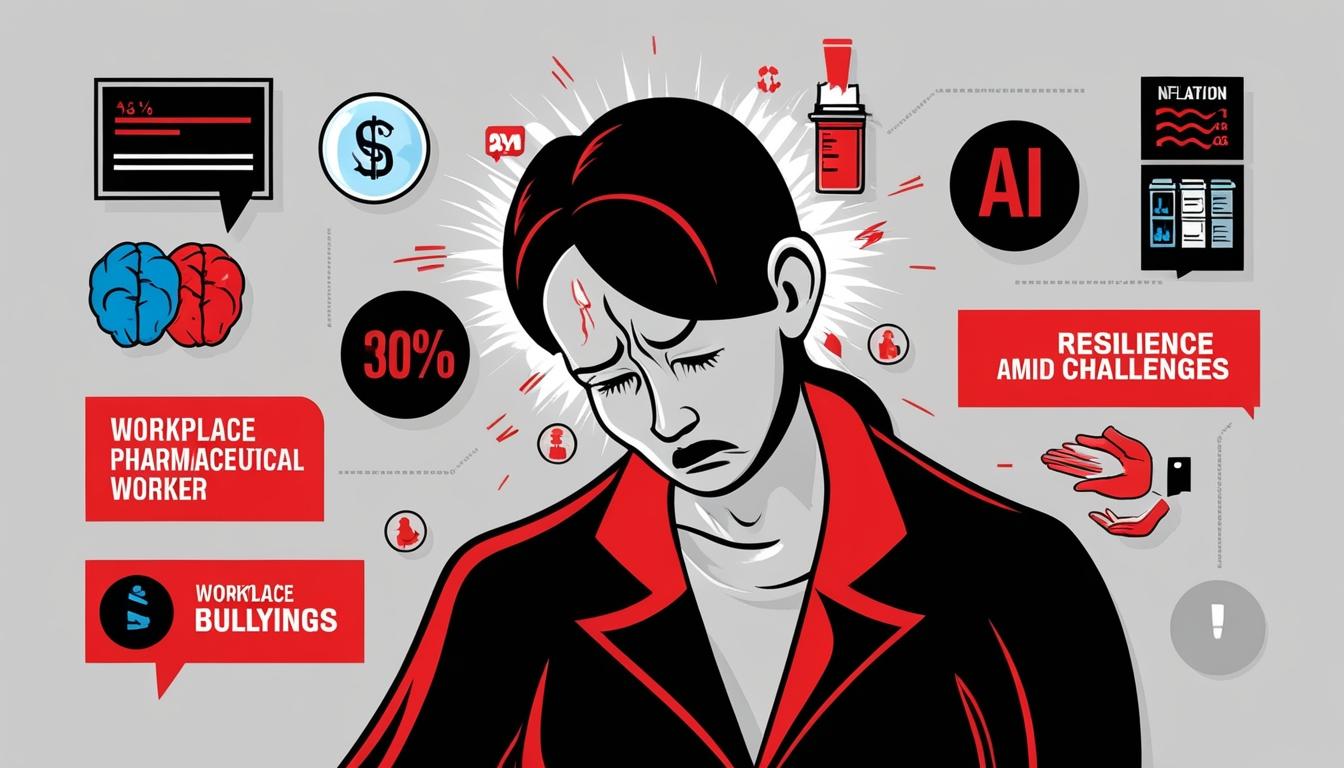

A new study reveals that 40% of employees in the pharmaceutical and life sciences sector experience workplace bullying, significantly higher than the national average, amidst escalating external pressures.
A recent study has highlighted significant challenges within the pharmaceutical and life sciences sector, revealing that 40% of employees have reported experiencing workplace bullying, a figure that is 9% higher than the average across other industries. This research forms part of the Resilience Nation report, commissioned by Ideagen, a regulatory and compliance software company, and encompasses insights from over 4,000 individuals across the US, UK, and Australia.
The findings indicate that external pressures, such as inflation, escalating costs of living, and ongoing supply chain issues, are exacerbating stress within the workplace. Notably, almost a third of respondents identified social media and high crime rates as additional factors contributing to the stress faced within the pharmaceutical and life sciences sectors.
Respondents reported that 58% are experiencing increased workloads and expanded job scopes, while 56% indicated they are working longer hours. These trends point to a growing worry about the sustainability of work-life balance in the sector.
Despite these pressures, the survey displays a somewhat optimistic outlook in terms of personal resilience. In fact, 84% of workers expressed feeling more resilient this year when compared to last year, making them the most resilient group among all sectors surveyed. This uplift in resilience appears to be particularly pronounced in the US, where 92% of respondents reported enhanced resilience.
Furthermore, the report revealed the key investments that respondents believe would further bolster resilience within the workforce. These include an increased focus on health and safety, the acquisition of talent, and the integration of technology to enhance efficiency. A significant finding from the survey is that nearly a third of US workers are advocating for greater usage of artificial intelligence (AI), pinpointing it as a critical area of growth for organisations looking to improve their operational frameworks.
From the perspective of employees, achieving a more manageable workload and providing flexible working options emerged as top priorities. Within the UK, 41% of respondents underscored the necessity for flexibility, aligning with workers’ desires for technology that supports these needs.
Ben Dorks, CEO of Ideagen, touched on the implications of these findings, stating, “Workers are facing growing pressures in and out of the workplace. People are being asked to deliver more at work when their resilience is being challenged by economic and political headwinds.” He further noted the potential detrimental effects on business productivity, workplace health and safety, and the overall quality of work produced.
Moreover, he highlighted the optimism among employees regarding the impact of emerging technologies and AI, stating, “People are optimistic that emerging tech and AI will ultimately lighten the load – but they’re not yet feeling the benefits. It’s a gap that now, more than ever, business leaders must look to close and support their workforce to ensure their staff remain safe and compliance needs are met across the business.”
This report draws attention to critical issues within the pharmaceutical and life sciences sector, providing a snapshot of the challenges and opportunities facing its workforce today.
Source: Noah Wire Services
- https://www.ideagen.com/company/news/2024-resilience-nation-report – Corroborates the Resilience Nation report commissioned by Ideagen, including insights from over 4,000 individuals across the US, UK, and Australia.
- https://www.environmentenergyleader.com/stories/global-resilience-trends-and-their-impact-on-high-compliance-industries,61819 – Supports the findings on external pressures such as inflation, costs of living, and supply chain issues, and the resilience levels in the pharmaceutical and life sciences sector.
- https://www.environmentenergyleader.com/stories/global-resilience-trends-and-their-impact-on-high-compliance-industries,61819 – Confirms that 92% of respondents in the US pharmaceutical and life sciences sectors reported increased resilience compared to last year.
- https://www.ideagen.com/company/news/2024-resilience-nation-report – Highlights the key investments in health and safety, talent acquisition, and technology integration to enhance efficiency and resilience.
- https://www.environmentenergyleader.com/stories/global-resilience-trends-and-their-impact-on-high-compliance-industries,61819 – Supports the finding that nearly a third of US workers are advocating for greater usage of artificial intelligence (AI) to improve operational frameworks.
- https://www.ideagen.com/company/news/2024-resilience-nation-report – Corroborates the need for flexible working options and technology that supports these needs, particularly in the UK.
- https://www.environmentenergyleader.com/stories/global-resilience-trends-and-their-impact-on-high-compliance-industries,61819 – Quotes Ben Dorks, CEO of Ideagen, on the growing pressures and the potential detrimental effects on business productivity and workplace health and safety.
- https://www.ideagen.com/company/news/2024-resilience-nation-report – Supports Ben Dorks’ statement on the optimism regarding the impact of emerging technologies and AI, and the need for businesses to close the gap in feeling these benefits.
- https://www.environmentenergyleader.com/stories/global-resilience-trends-and-their-impact-on-high-compliance-industries,61819 – Provides context on the comparative resilience levels across different sectors, including the pharmaceutical and life sciences sector.
- https://www.ideagen.com/company/news/2024-resilience-nation-report – Details the challenges and opportunities facing the workforce in the pharmaceutical and life sciences sector, as highlighted in the report.







