






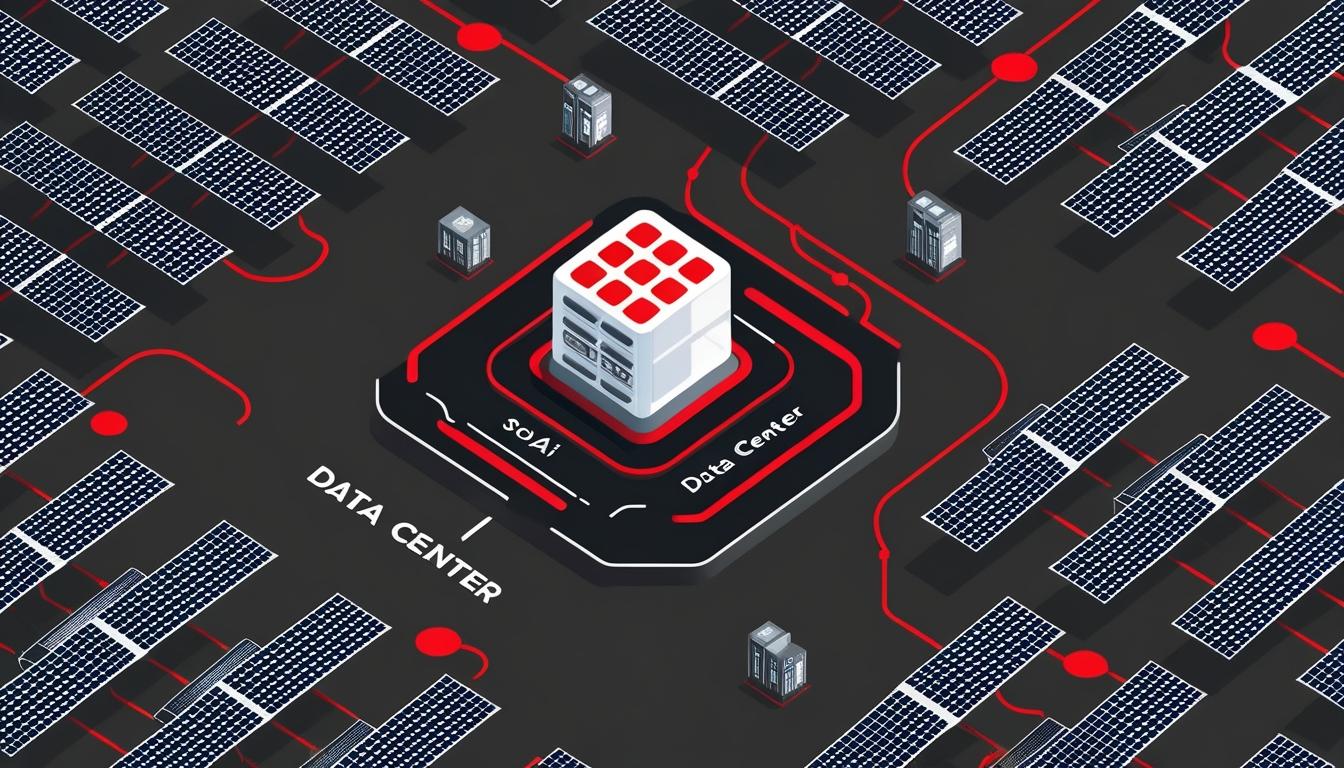

The rise of AI in business is projected to significantly alter energy demand and investment infrastructure, necessitating a shift towards renewable energy sources and innovative financing solutions.
The increasing integration of artificial intelligence (AI) in the business sector is set to drive significant changes in energy demand and investment infrastructure over the coming years. Wood Mackenzie, a notable data and analytics provider in the energy industry, projects that AI software powered by large language models will necessitate a rapid expansion in data centre capacity, potentially causing electricity demand to surge by 10% to 20% annually through 2030.
This anticipated growth in energy demand coincides with the possibility of a shift in U.S. industrial policy under the Trump administration, which may favour an “America First” approach aimed at boosting local manufacturing. Should this policy take hold, the demand for additional power to support industrial and commercial activities could increase even more pronouncedly. Experts suggest that renewable energy sources will continue to play an essential role in addressing this demand, particularly in light of existing conventional power generation methods such as coal and natural gas.
Analysis indicates that while renewable energy targets remain a focal point, traditional power sources may need to be retained longer than originally planned if utilities opt to delay the phase-out of coal power plants and expedite natural gas-fired generation. The transition to new energy capacity typically requires significant time for development.
For investors, this context creates new opportunities, especially in financing utility-scale battery storage systems needed to manage intermittent power supply challenges associated with solar and wind energy. Customized financing solutions for such projects can often be more flexibly structured by private lenders compared to conventional banks.

In terms of project development, expected alterations in federal policy could spur faster progress on current renewable initiatives—particularly if there is an increase in efforts to amend or repeal the Inflation Reduction Act’s (IRA) renewable tax credits. Developers have been observed to take advantage of the existing tax framework by employing safe harbour provisions, which allow them to qualify for tax credits based on the timing of substantial project work. This provides a strategic pathway for projects to secure financial viability even as legislative conditions evolve.
The necessity of bolstering an overburdened power grid creates additional layers of complexity regarding potential IRA repeal motions. Furthermore, the ongoing job creation and investment facilitated by the IRA has had positive outcomes across both politically varied states, suggesting that certain renewable energy initiatives might endure despite legislative changes. For instance, lower operational costs associated with utility-scale solar installations have caused a decrease in expenses, making solar power competitive even without the influence of tax incentives.
Globally, the regulatory and investment trajectories reflect clearer advancements in renewable energy. In Europe, recent data indicates that power generated through solar and wind surpassed that produced via fossil fuels in 2024, with projections estimating that the market will more than double in size by 2030.
As the market continues to evolve, credit investors are advised to remain cautious, assessing risks associated with renewable energy investments while keeping a closer watch on the structural dynamics of debt repayment hierarchies. As uncertainty surrounding U.S. renewable policies heightens, the appeal for high-ranking positions in investment structures may increase. In the coming periods, investors are likely to adopt a more selective approach, but opportunities may still exist, particularly in notable renewable technologies, including large-scale solar power and battery storage systems.
Source: Noah Wire Services
- https://www.utilitydive.com/news/artificial-intelligence-doubles-data-center-demand-2030-EPRI/717467/ – Corroborates the anticipated growth in data center electricity demand driven by AI, estimating it could double by 2030 and consume up to 9% of the United States’ electricity generation.
- https://www.woodmac.com/press-releases/2024-press-releases/us-utilities-to-face-significant-challenge-as-power-demand-surges-for-the-first-time-in-decades/ – Supports the projection of significant growth in data center capacity and the associated surge in electricity demand, driven by AI and other industrial activities.
- https://www.goldmansachs.com/insights/articles/AI-poised-to-drive-160-increase-in-power-demand – Confirms the substantial increase in data center power demand due to AI, estimating a 160% growth by 2030 and highlighting the higher electricity requirements of AI queries compared to traditional searches.
- https://ifp.org/future-of-ai-compute/ – Details the exponential growth in power demand for AI data centers globally, projecting an increase of over 130 GW by 2030 and the challenges associated with meeting this demand.
- https://www.utilitydive.com/news/artificial-intelligence-doubles-data-center-demand-2030-EPRI/717467/ – Discusses the regional concentration of data center load and the challenges in ensuring reliable and affordable power supply to meet the growing demands.
- https://www.woodmac.com/press-releases/2024-press-releases/us-utilities-to-face-significant-challenge-as-power-demand-surges-for-the-first-time-in-decades/ – Mentions the resurgence in U.S. manufacturing and the additional power demand from sectors like battery, solar wafers, and semiconductors, as well as electric vehicles and electrolysers.
- https://ifp.org/future-of-ai-compute/ – Highlights the need for new energy capacity to support AI data centers, noting that much of the new American power generation comes from intermittent sources like solar and wind, which are unsuitable for AI data centers.
- https://www.goldmansachs.com/insights/articles/AI-poised-to-drive-160-increase-in-power-demand – Explains the slowing efficiency gains in electricity use by data centers and the increasing power consumption driven by AI innovations.
- https://www.utilitydive.com/news/artificial-intelligence-doubles-data-center-demand-2030-EPRI/717467/ – Addresses the importance of collaboration between data center owners, utilities, and government to manage the growing power demands and ensure reliable power supply.
- https://ifp.org/future-of-ai-compute/ – Discusses the technical challenges and infrastructure needs for building and operating large-scale AI clusters, including the requirement for 24/7 power supply.
- https://www.woodmac.com/press-releases/2024-press-releases/us-utilities-to-face-significant-challenge-as-power-demand-surges-for-the-first-time-in-decades/ – Notes the potential impact of U.S. industrial policy changes on power demand, particularly in relation to an ‘America First’ approach and its effects on local manufacturing and energy needs.







