






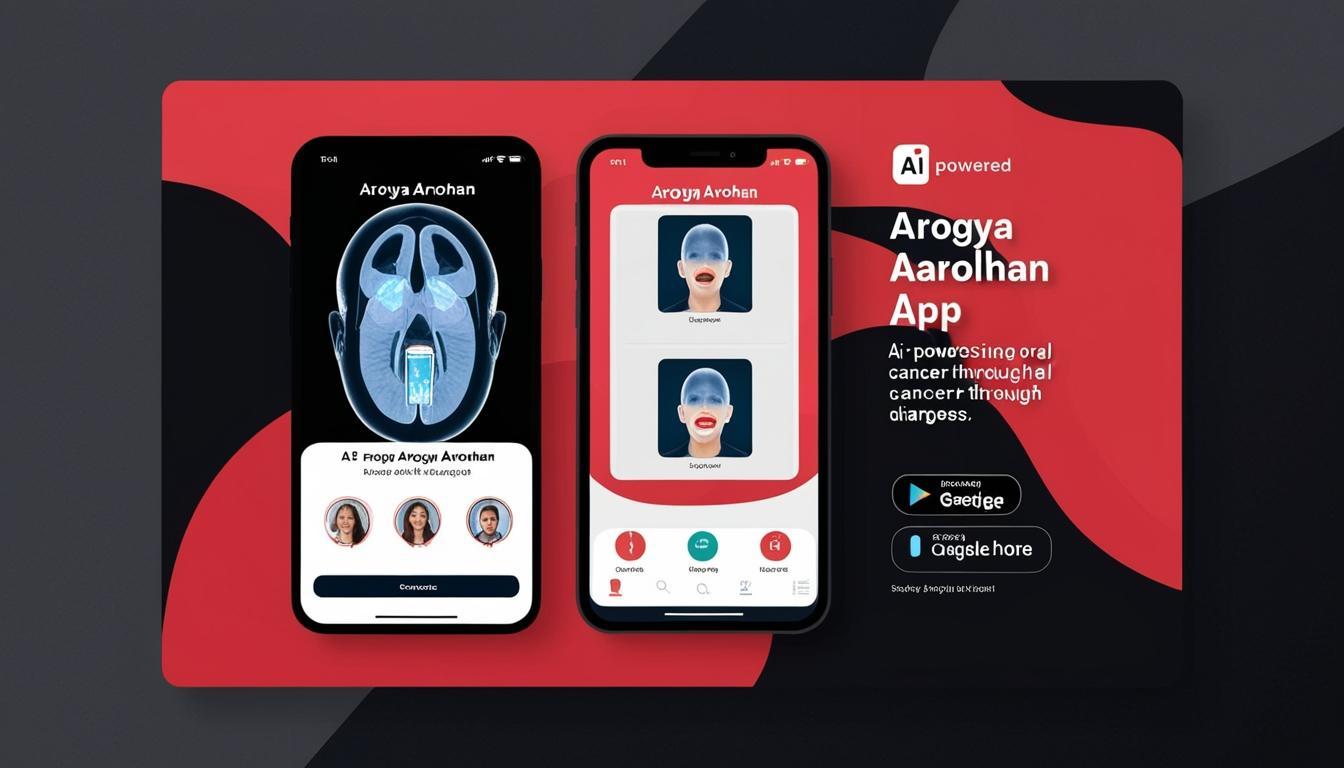
The Arogya Aarohan app, a collaboration between AIIMS Delhi and IISc Bangalore, is set to revolutionise oral cancer detection and enhance public health in India through innovative AI-driven solutions.
Healthcare innovations in India are on the verge of revolutionising diagnostic practices, particularly in the realm of oral cancer detection and other significant health issues, thanks to emerging artificial intelligence (AI) technologies. A key player in this transformation is the Arogya Aarohan app, developed through collaboration between the All India Institute of Medical Sciences (AIIMS) Delhi and the Indian Institute of Science (IISc) Bangalore. As part of a larger Rs 300-crore initiative, this app illustrates the potential of low-cost smartphones to serve as life-saving diagnostic tools.
This initiative aims to alleviate the burden on healthcare systems, especially in rural areas of India where there is a notable shortage of medical professionals. The AI and healthcare partnership has established a Centre of Excellence, focusing on five primary health concerns under national programmes: cancer screening (covering breast, oral, and cervical cancers), chronic disease management, visual impairment, infectious diseases, and maternal and child health.
Dr Krithika Rangarajan, an Associate Professor of Radiology at AIIMS Delhi and the lead of the AI team, highlighted the project’s focus on public health enhancement. “This is a public health-focused project aimed at improving the efficiency of India’s national healthcare programmes,” she stated. She further elaborated that instead of beginning with AI solutions, the team analysed the country’s healthcare system to identify key inefficiencies and pinpoint where AI could be most effective.
The Arogya Aarohan app allows healthcare workers to assess oral cancer risk using just a few photographs of the patient’s oral cavity. Users input patient details, including medical history regarding tobacco and alcohol usage, and answer simple questions before uploading images taken in a sequential manner. The AI then processes this data to deliver a risk assessment labelled as “suspicious” or “non-suspicious,” subsequently guiding specialists on necessary next steps.
To date, trials of the app have been conducted on nearly 2,400 patients at AIIMS and its tertiary care centres. While Dr Deepika Mishra, Additional Professor at AIIMS, acknowledged that the app is still in development, she indicated that it shows promising accuracy and is set to improve further with ongoing clinical trials.
The AI initiatives extend beyond oral cancer. Solutions are also being developed for the early detection of diabetic retinopathy, a serious complication for individuals with diabetes. Dr Rohan Chawla from AIIMS highlighted that this app, which has already demonstrated an impressive accuracy of 90-95% during hospital trials, is essential in a country where diabetes impacts a significant population.
Simultaneously, AIIMS researchers are innovating a multi-modal device that can identify precancerous and cancerous areas in tobacco users’ mouths using various advanced techniques. This device, currently undergoing validation, is designed to function as a clinical support tool usable by professionals with varying levels of training.
In the realm of infectious diseases, AI is being harnessed to detect tuberculosis (TB) at earlier stages. A new cough-analysis app aims to distinguish TB-related coughs from other respiratory conditions, allowing for prompt diagnostic assessments. Dr Neeraj Nischal, who is leading this initiative, noted the importance of intervening before infections can spread undetected.
In addition to these cutting-edge applications, initiatives are being undertaken to improve health outcomes for conditions like leprosy and sexually transmitted infections. The latter includes the development of a patient-centric app that will provide users with interactive assessments and connect them to specialists when necessary.
Despite these advancements, challenges remain. Issues such as image quality, language barriers, and technological accessibility in remote areas are being addressed. While some training sessions have highlighted difficulties—particularly around the app’s English-only interface—efforts are underway to adapt content for regional languages to enhance accessibility.
As the healthcare landscape in India evolves, these AI-driven initiatives represent a significant step towards addressing existing healthcare inequities, particularly for underserved communities. This integration of technology into healthcare not only aims to provide timely interventions but also to streamline processes that traditionally burden healthcare systems. The ongoing efforts underscore a commitment to advancing the capabilities of AI in addressing public health challenges in India.
Source: Noah Wire Services
- https://aarogya.ai – This link supports the use of AI in healthcare, particularly in diagnosing drug resistance, which is a broader context of AI applications in healthcare similar to those mentioned in the article.
- https://solve.mit.edu/challenges/heath-in-fragile-contexts-challenge/solutions/77575 – This link provides information on AI-based diagnostic solutions for retinal diseases, which is similar to the early detection of diabetic retinopathy mentioned in the article.
- https://forum.challenge.gd4h.ecologie.gouv.fr/health-ai-india-gov – This link discusses government initiatives in India to promote AI in healthcare, aligning with the broader context of AI integration in India’s healthcare system described in the article.
- https://indiaai.gov.in/article/ai-is-transforming-patient-care-system-in-india-but-what-are-the-probable-challenges – This link highlights the transformation of patient care in India through AI, including personalized medicine and addressing unique healthcare challenges, which is relevant to the AI-driven initiatives mentioned in the article.
- https://www.noahwire.com – Although the specific article is not available, this link is the source mentioned for the information provided, indicating it would contain details on healthcare innovations and AI applications in India.
- https://indiaai.gov.in/ – This link provides general information on AI initiatives in India, including those in the healthcare sector, which supports the broader context of AI integration in healthcare discussed in the article.
- https://www.aiims.edu/en.html – This link is to the All India Institute of Medical Sciences (AIIMS) website, which is involved in several AI-driven healthcare initiatives mentioned in the article.
- https://iisc.ac.in/ – This link is to the Indian Institute of Science (IISc) website, another key institution involved in the development of AI-based healthcare solutions as mentioned in the article.
- https://www.mygov.in/task/national-health-stack-nhs/ – This link discusses the National Health Stack (NHS), a government initiative to create a unified healthcare system using AI, which aligns with the article’s mention of AI in national healthcare programmes.
- https://abdm.gov.in/ – This link is to the Ayushman Bharat Digital Mission (ABDM), which uses AI to analyze health data and provide personalized health recommendations, supporting the article’s discussion on AI in healthcare initiatives.
- https://www.healthit.gov/topic/health-it-and-health-information-exchange/hie – Although not specific to India, this link provides general information on health data analytics and AI, which is relevant to the health data analytics platforms mentioned in the context of Indian healthcare initiatives.







