






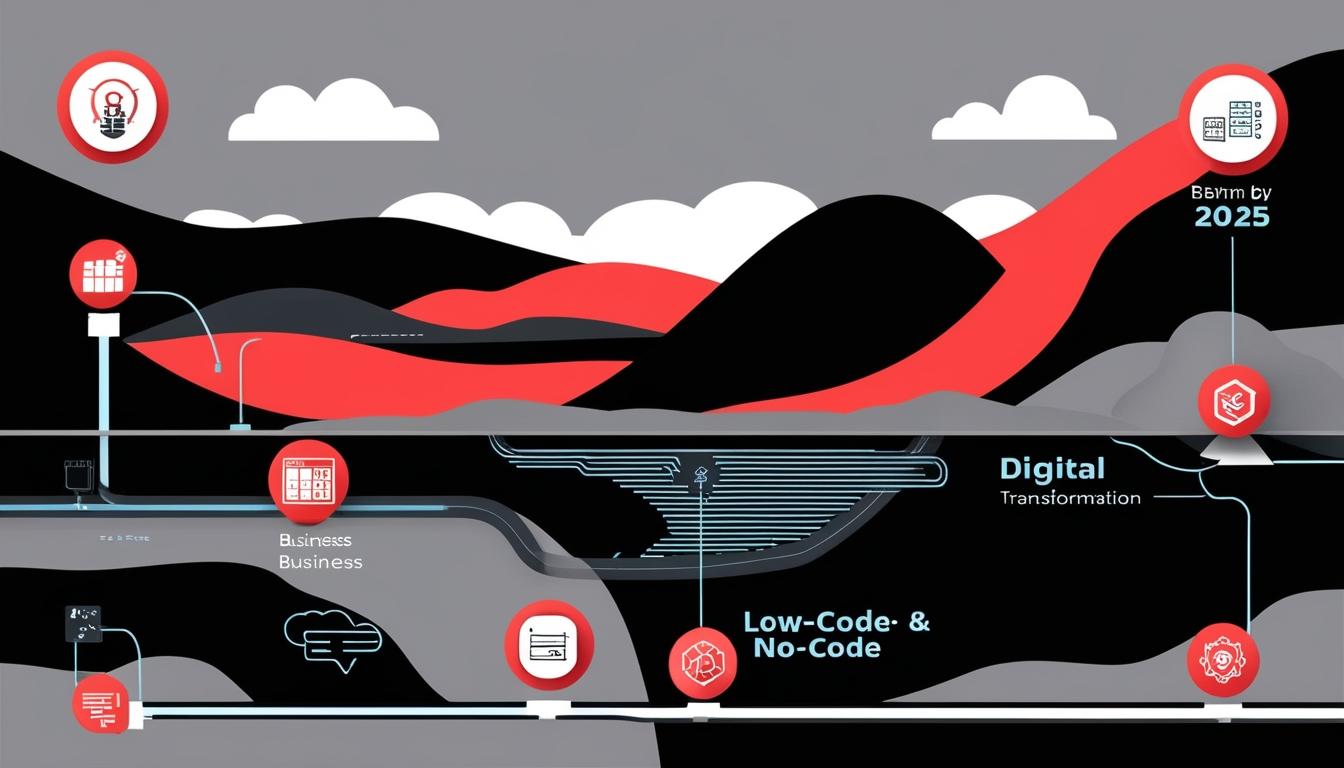

The rise of low-code and no-code development tools is set to revolutionise application development, allowing individuals without coding skills to contribute significantly.
The landscape of business technology is poised for a significant transformation by 2025, with the rapid emergence of low-code and no-code development platforms at the forefront of this change. According to projections by Forrester, these innovative tools could account for a staggering 65% of all application development activity in the near future. This predicted shift indicates a broader trend towards the democratization of technology, enabling individuals with little to no coding experience to create applications, thereby revolutionizing traditional software development processes.
The rising accessibility of these platforms is a pivotal development for businesses and investors alike. As noted by Analytics Insight, the flexibility and user-friendliness inherent in low-code and no-code tools allow a broader range of individuals, equipped with diverse skills, to contribute to application development. This transition is not merely a matter of survival in an increasingly digital market; it also presents opportunities for growth and innovation.
Industry experts suggest that organisations that proactively integrate these emerging technologies into their operations will be better positioned to thrive amidst fierce competition. The transition from traditional coding practices to these more inclusive methodologies signals a critical evolution within the business landscape. Companies are advised to embrace these trends and foster environments that encourage adaptation and innovative thinking among their teams.
As this technology develops, the implications for business practices are vast. The ability to streamline processes and reduce reliance on specialised coding skills will likely lead to faster project turnarounds and enhanced collaborative efforts across departments. This shift is not just a passing trend; it represents a foundational change in how businesses approach application development and technology integration.
By 2025, the convergence of these technologies is expected to reshape the foundations of many industries, compelling business leaders and investors to rethink their strategies and operational frameworks. The need for agility and responsiveness in business has never been more crucial, and those who navigate these changes successfully may find themselves at a distinctive advantage in the market.
Source: Noah Wire Services
- https://www.nucamp.co/blog/coding-bootcamp-full-stack-web-and-mobile-development-2025-lowcodenocode-platforms-accelerating-development-in-2025 – Corroborates the rapid emergence of low-code and no-code development platforms and their impact on democratizing technology and reducing development time.
- https://sdtimes.com/low-code/forrester-predicts-three-possible-outcomes-for-the-future-of-low-code/ – Supports the projection that low-code platforms could account for a significant portion of application development activity and discusses Forrester’s predictions on the market growth.
- https://sapinsider.org/map/low-code-development-trends-in-2025/ – Highlights the trend towards democratization of technology, enabling non-technical individuals to build applications, and the expansion of low-code development across various industries.
- https://www.appbuilder.dev/low-code-statistics – Provides statistics from Forrester and Gartner on the widespread adoption of low-code development platforms and their projected market growth.
- https://www.nucamp.co/blog/coding-bootcamp-full-stack-web-and-mobile-development-2025-lowcodenocode-platforms-accelerating-development-in-2025 – Explains how low-code and no-code platforms enhance flexibility and user-friendliness, allowing a broader range of individuals to contribute to application development.
- https://sapinsider.org/map/low-code-development-trends-in-2025/ – Discusses the benefits of integrating low-code and no-code technologies, including faster project turnarounds and enhanced collaborative efforts across departments.
- https://www.appbuilder.dev/low-code-statistics – Supports the idea that companies integrating these technologies will be better positioned to thrive, with statistics showing widespread adoption and benefits.
- https://sdtimes.com/low-code/forrester-predicts-three-possible-outcomes-for-the-future-of-low-code/ – Highlights the critical evolution within the business landscape as companies transition from traditional coding practices to more inclusive methodologies.
- https://www.nucamp.co/blog/coding-bootcamp-full-stack-web-and-mobile-development-2025-lowcodenocode-platforms-accelerating-development-in-2025 – Explains how the convergence of these technologies will reshape the foundations of many industries, compelling business leaders to rethink their strategies.
- https://sapinsider.org/map/low-code-development-trends-in-2025/ – Emphasizes the need for agility and responsiveness in business, highlighting the advantages of those who successfully navigate these changes.







