






As AI adoption in enterprises accelerates, leaders must adapt their management approach to foster collaboration between human workers and AI systems.
The landscape of business is rapidly evolving, particularly with the increasing adoption of artificial intelligence (AI) agents within enterprises. A recent report by Deloitte indicates that 25% of organisations currently utilising generative AI are expected to implement AI agents by 2025, a figure poised to rise to 50% by 2027. This shift underscores the need for business leaders to embrace a transformative mindset geared toward an AI-first future underpinned by hyper-automation and advanced connectivity.
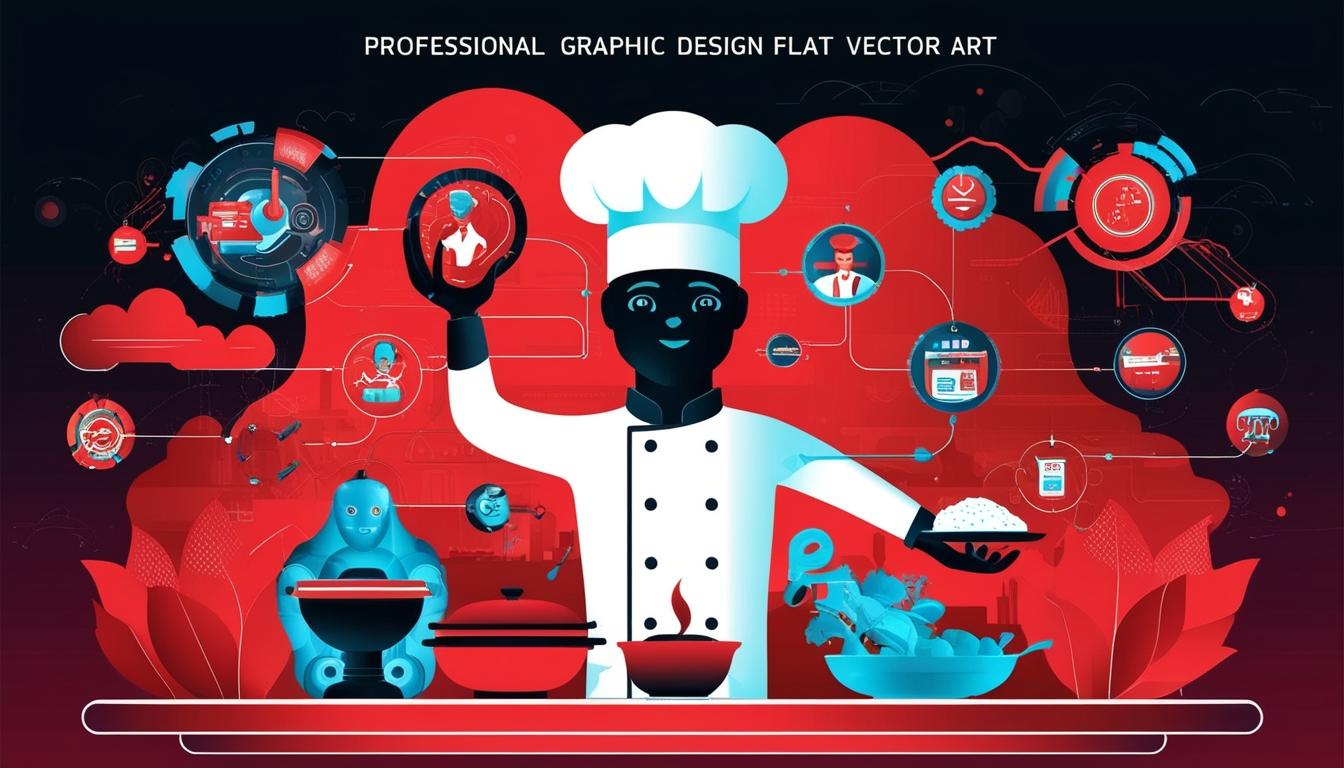
In light of these developments, the approach to operational management must evolve. An analogy drawn from culinary arts emphasises this transition: business leaders are encouraged to adopt the role of chefs rather than mere cooks. While cooks follow set recipes, chefs are adept at discerning the qualities of various ingredients and innovating based on foundational principles. This paradigm shift is deemed essential in navigating a marketplace increasingly influenced by AI and automation technologies.
Gartner, a well-respected technology research firm, projects that agentic AI—systems capable of autonomously planning and executing tasks to meet specific user-defined goals—will emerge as a pivotal strategic technology from 2025 onwards. The virtual workforce created by these systems will significantly alleviate the burden on human workers, leading to the forecasted fact that by 2028, at least 15% of everyday work decisions will be made autonomously by these AI agents, an increase from the current figure of zero.
As businesses transition towards this AI-integrated paradigm, they face critical questions about the dynamics between human employees and AI-driven systems. The report highlights the urgency of redefining the relationships between people and machines to foster collaboration that delivers tangible value to stakeholders. In a future where machine-led operations are commonplace, established corporate norms and beliefs—often unchallenged assumptions termed orthodoxy—must be scrutinised and potential barriers to innovation addressed.
A recurrent theme within corporate narratives asserts that “our people are the difference,” a statement that, while widely accepted, the article suggests may not accurately encapsulate the reality of workforce dynamics. Human resource practices typically prioritise industry experience as a key hiring criterion, reinforcing a narrative that employees are interchangeable across similar roles. However, the report argues that employee performance is not solely the result of individual capabilities; instead, it is influenced heavily by the organisational culture, interpersonal relationships, and the management styles in place.
For instance, Simon Sinek, a noted author on business leadership, recounts a compelling contrast between two baristas who perform the same job under disparate management conditions. The differing experiences and performances are predominantly shaped by the management’s engagement approach with employees, highlighting that leadership philosophies can render significantly different outcomes in service delivery and employee morale.
In the evolving context of AI deployment, building a strong foundation of relational intelligence will become critical. This concept revolves around collaboratively establishing productive relationships between human and AI agents to enhance business performance and stakeholder satisfaction. Companies that overlook this integral aspect risk relying solely on outdated orthodoxies, potentially hindering their success in a machine-driven economy.
In conclusion, as enterprises increasingly embrace AI technologies and automation, the focus of business leaders must shift to creating sustainable, healthy relationships within their workforce—both human and digital. The future will likely favour organisations that recognise the emergent value derived from the quality of these relationships over merely the sum of individual employee capabilities, positioning them for greater success in a transformed marketplace.
Source: Noah Wire Services
- https://www.eweek.com/news/enterprise-ai-agents-adoption-will-double/ – Corroborates the Deloitte prediction that 25% of enterprises using generative AI will deploy AI agents by 2025, and this figure will rise to 50% by 2027.
- https://www.prnewswire.com/news-releases/deloitte-2025-predictions-report-generative-ai-paving-the-way-for-a-transformative-future-in-technology-media-and-telecommunications-302309433.html – Supports the prediction that 25% of enterprises using GenAI will deploy AI agents by 2025, growing to 50% by 2027, and highlights the role of agentic AI in business processes.
- https://www2.deloitte.com/us/en/insights/industry/technology/technology-media-and-telecom-predictions/2025/women-and-generative-ai.html – Provides context on the increasing adoption of generative AI by women and its implications for the workforce, aligning with the broader theme of AI integration in enterprises.
- https://www.eweek.com/news/enterprise-ai-agents-adoption-will-double/ – Explains the transition to agentic AI and its potential to accelerate business processes, reduce costs, and drive growth, supporting the need for a transformative mindset in business leaders.
- https://www.prnewswire.com/news-releases/deloitte-2025-predictions-report-generative-ai-paving-the-way-for-a-transformative-future-in-technology-media-and-telecommunications-302309433.html – Details the capabilities and potential applications of AI agents, including their role in driving productivity and efficiency gains in workflows, which underscores the need for evolving operational management.
- https://www.eweek.com/news/enterprise-ai-agents-adoption-will-double/ – Highlights the importance of redefining relationships between people and machines to foster collaboration, a key theme in the article about navigating an AI-influenced marketplace.
- https://www.prnewswire.com/news-releases/deloitte-2025-predictions-report-generative-ai-paving-the-way-for-a-transformative-future-in-technology-media-and-telecommunications-302309433.html – Discusses the future role of AI agents in making autonomous decisions, aligning with the article’s mention of the virtual workforce and autonomous decision-making by 2028.
- https://www.eweek.com/news/enterprise-ai-agents-adoption-will-double/ – Emphasizes the need for business leaders to scrutinize and address potential barriers to innovation, including established corporate norms and beliefs, in the context of AI integration.
- https://www.prnewswire.com/news-releases/deloitte-2025-predictions-report-generative-ai-paving-the-way-for-a-transformative-future-in-technology-media-and-telecommunications-302309433.html – Supports the argument that employee performance is influenced by organizational culture, interpersonal relationships, and management styles, rather than just individual capabilities.
- https://www.eweek.com/news/enterprise-ai-agents-adoption-will-double/ – Highlights the importance of building relational intelligence to establish productive relationships between human and AI agents, a critical aspect for business success in an AI-driven economy.
- https://www.prnewswire.com/news-releases/deloitte-2025-predictions-report-generative-ai-paving-the-way-for-a-transformative-future-in-technology-media-and-telecommunications-302309433.html – Concludes by emphasizing the need for sustainable, healthy relationships within the workforce, both human and digital, to position organizations for greater success in a transformed marketplace.







