





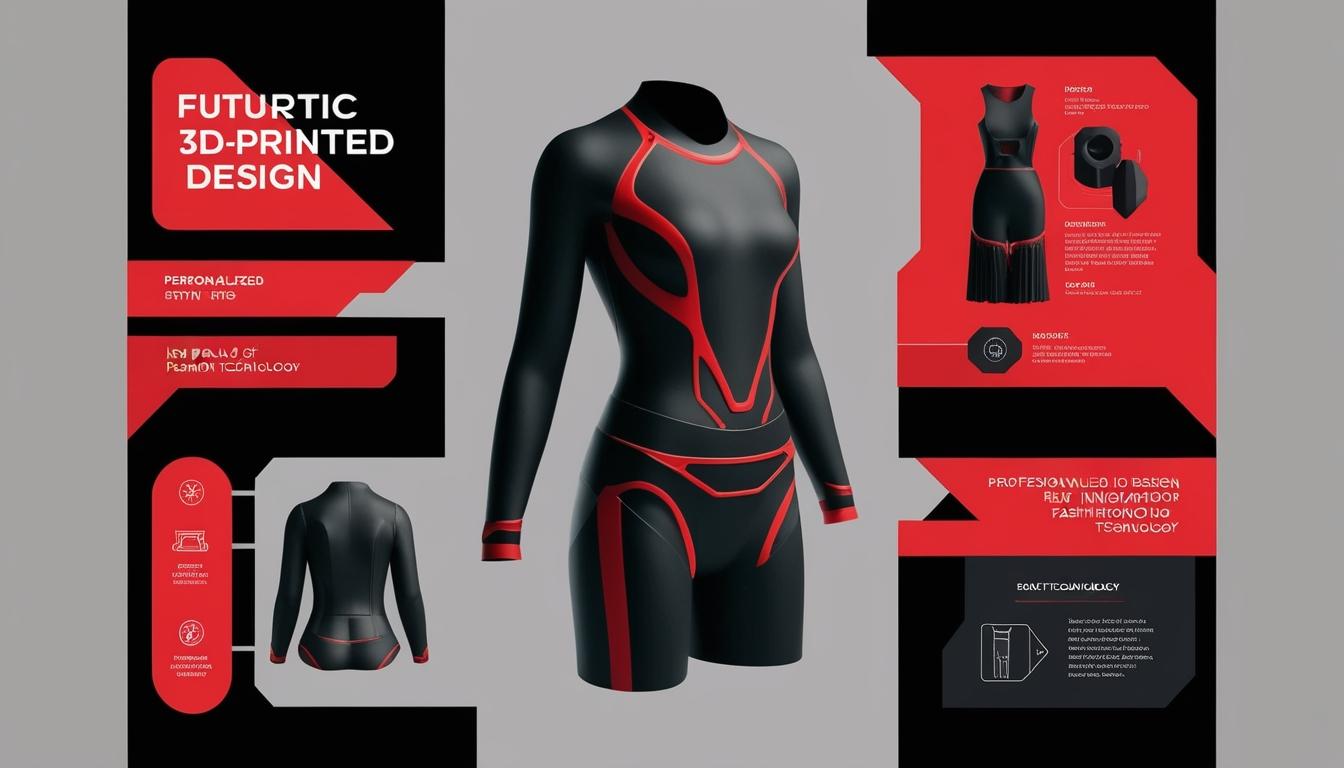

Advancements in 3D printing technology are reshaping garment production, enhancing personalisation and sustainability in the fashion industry.
The fashion industry is on the cusp of a significant transformation, primarily driven by advancements in 3D printing technology, which is reshaping the processes of garment design and production. As businesses seek to innovate and adapt to evolving market demands, mastering 3D printing has become an essential skill for future fashion professionals. The technology offers practical solutions to age-old challenges while also opening doors to unprecedented creative opportunities.
The vision of garments being produced on demand, tailored precisely to the individual’s measurements with minimal production waste, is rapidly becoming a reality. This shift towards 3D printing is not only enhancing efficiency but also emphasising personalisation and sustainability in fashion. Industry leaders and emerging talents are recognising the importance of leveraging this technology to remain competitive in a landscape that is constantly evolving.
The capacity to create custom-made pieces tailored to a wide range of body types and preferences marks a groundbreaking shift in fashion inclusivity. By moving away from rigid, standardised sizing, 3D printing facilitates the production of collections that reflect the diversity of consumer needs. This has significant implications for reducing overproduction—a longstanding issue exacerbated by traditional manufacturing methods—while simultaneously catering to demands for unique and individualised fashion experiences.
Advancements in recyclable materials further underscore the potential of 3D printing to spearhead a sustainable future for the fashion industry. Julia Koerner, a key figure in 3D fashion innovation, envisions a future where recycled materials, particularly those sourced from discarded clothing, serve as primary raw materials for 3D printers. This progressive approach aims to establish a circular production model that minimises waste and conserves resources, directly addressing the sustainability challenges that plague the industry.

In terms of design, 3D printing is revolutionising traditional manufacturing processes within the footwear sector. This technology enables footwear components to be crafted layer by layer using pre-designed digital models. Leading brands are actively exploring this innovation; for instance, Nike has successfully utilised 3D printing to perfect its Flyknit line, while Adidas has partnered with Carbon to produce the Futurecraft 4D shoes, which feature unique custom soles. Moreover, New Balance employs selective laser sintering technology to create precisely fitted midsoles for its Zante Generate model, showcasing the innovative capabilities of 3D printing.
The realm of conceptual fashion and haute couture is also experiencing a renaissance due to 3D printing. Designers such as Anouk Wipprecht are pushing creative boundaries; her 2015 creation, the Spider Dress, exemplifies how garments can become interactive, responding to movements. The Fall/Winter 2023-24 Haute Couture show by Balenciaga introduced a striking dress resembling armour, crafted from 3D-printed galvanised resin, which showcased not only the technological prowess but also a redefinition of luxury in haute couture.
In conclusion, the current and future trends in AI automation and 3D printing are set to significantly influence business practices within the fashion industry. As stakeholders grapple with how to harness these technological advancements, the emphasis will remain on transforming manufacturing efficiencies, fostering personalisation, and forging sustainable practices to meet consumer demands in a rapidly changing world.
Source: Noah Wire Services
- https://fashionunited.com/news/fashion/the-future-of-fashion-is-here-how-3d-printing-is-changing-the-industry/2024120463260 – Corroborates the transformation of the fashion industry through 3D printing, emphasizing sustainability, personalization, and reducing fabric waste.
- https://invent3d.design/fashion-industry-3d-printing/ – Supports the impact of 3D printing on fashion, including customization, innovative design possibilities, sustainability, and rapid production.
- https://www.in3dtec.com/the-application-of-3d-printing-in-fashion/ – Details the application of 3D printing in fashion, including 3D printed cloth, fabric, shoes, and jewelry, highlighting customization and intricate designs.
- https://fashionunited.com/news/fashion/the-future-of-fashion-is-here-how-3d-printing-is-changing-the-industry/2024120463260 – Explains how 3D printing allows for on-demand garment printing, minimizing waste and creating custom fits, enhancing fashion inclusivity.
- https://invent3d.design/fashion-industry-3d-printing/ – Discusses the use of recyclable and biodegradable materials in 3D printing, supporting a sustainable future for the fashion industry.
- https://www.in3dtec.com/the-application-of-3d-printing-in-fashion/ – Highlights the role of 3D printing in the footwear sector, including examples from Nike and Adidas, and the use of selective laser sintering technology by New Balance.
- https://invent3d.design/fashion-industry-3d-printing/ – Mentions the impact of 3D printing on conceptual fashion and haute couture, citing designers like Iris van Herpen and innovative creations such as interactive garments.
- https://fashionunited.com/news/fashion/the-future-of-fashion-is-here-how-3d-printing-is-changing-the-industry/2024120463260 – Emphasizes the reduction of overproduction and the catering to demands for unique and individualised fashion experiences through 3D printing.
- https://www.in3dtec.com/the-application-of-3d-printing-in-fashion/ – Provides examples of 3D printed accessories, such as jewelry and headpieces, showcasing the freedom in design and customization offered by 3D printing.
- https://invent3d.design/fashion-industry-3d-printing/ – Discusses the future prospects of 3D printing in fashion, including its potential to revolutionize the industry through innovation and growth.







