





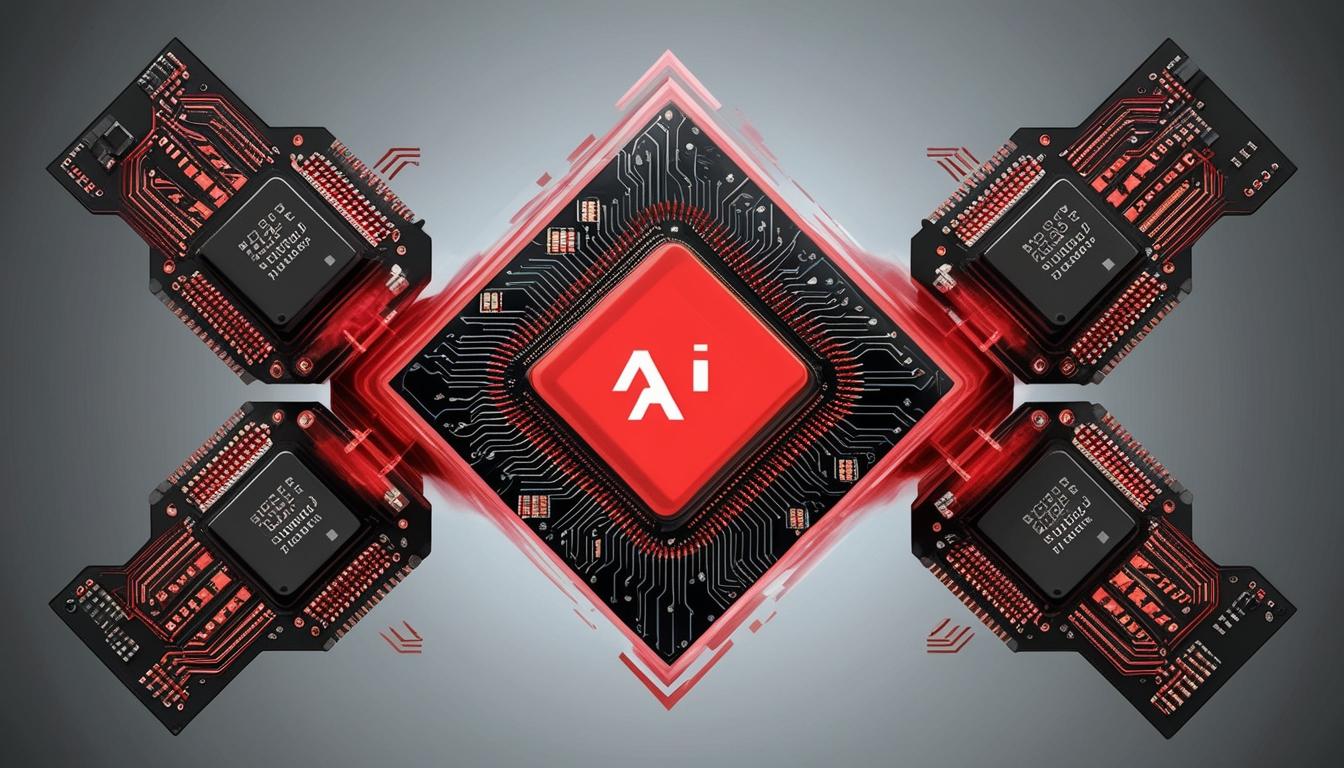

The semiconductor industry is undergoing a transformation as AI technologies streamline chip design, enhancing efficiency and sparking innovation.
The integration of artificial intelligence (AI) into chip design processes has emerged as a significant advancement in the semiconductor industry, according to a report by Analytics Insight. Traditionally, chip design has been a laborious and intricate endeavour, characterised by extensive simulations and numerous manual revisions. However, the introduction of AI is poised to radically alter this landscape, accelerating the design process and enhancing overall efficiency.
AI technologies enable quicker execution of design tasks, allowing engineers to optimise and test various parameters at an unprecedented pace. By harnessing the power of machine learning algorithms, past designs can be analysed to identify successful patterns. This capability not only speeds up the design process but also facilitates the provision of suggestions for improvements, thereby sparking innovations that could lead to the development of more powerful and energy-efficient chips.
The incorporation of AI tools into semiconductor design workflows is seen as a breakthrough that expands the parameters of innovation within the industry. As designers leverage AI for rapid optimisation, the exploration of new architectural possibilities becomes increasingly feasible. This trend is expected to significantly influence the future trajectory of semiconductor development, potentially altering everything from production timelines to the energy efficiency of final products.
The current momentum in AI-driven chip design underscores the vital role that emerging technologies will play in reshaping industry practices. The report underscores a broader shift towards automation within various sectors, as companies strive to remain competitive in an evolving technological landscape. As AI continues to advance and integrate into critical processes, monitoring its impact on business practices will be crucial for understanding the future of the semiconductor industry.

Source: Noah Wire Services
- https://www.tessolve.com/blogs/how-do-ai-powered-eda-tools-shape-the-future-of-chip-design/ – This article explains how AI-powered EDA tools are revolutionizing the chip design industry by automating various tasks, optimizing designs for better performance and power efficiency, and enabling the exploration of a larger design space.
- https://www.tessolve.com/blogs/how-do-ai-powered-eda-tools-shape-the-future-of-chip-design/ – It discusses how AI aids in simultaneously optimizing chip designs for power consumption and performance, and how AI-driven technologies can analyze large datasets to derive insights and make data-driven decisions.
- https://www.tessolve.com/blogs/how-do-ai-powered-eda-tools-shape-the-future-of-chip-design/ – The article highlights the benefits of AI in design space exploration, physical design automation, and managing big data in the design process.
- https://cset.georgetown.edu/publication/ai-chips-what-they-are-and-why-they-matter/ – This report explains how AI chips are designed to accelerate AI algorithms, executing a large number of calculations in parallel and using low precision calculations to reduce the number of transistors needed.
- https://cset.georgetown.edu/publication/ai-chips-what-they-are-and-why-they-matter/ – It emphasizes the efficiency and cost-effectiveness of state-of-the-art AI chips compared to traditional CPUs for AI algorithm training and inference.
- https://semiengineering.com/new-ai-processors-architectures-balance-speed-with-efficiency/ – This article discusses the shift in AI processor design towards a balanced approach, focusing on specialized compute elements, faster data movement, and lower power consumption.
- https://semiengineering.com/new-ai-processors-architectures-balance-speed-with-efficiency/ – It mentions the use of chiplets in 2.5D/3.5D packages for greater customization and better performance per watt, as well as improvements in branch prediction and data management.
- https://www.tessolve.com/blogs/how-do-ai-powered-eda-tools-shape-the-future-of-chip-design/ – The article highlights how AI-powered EDA tools automate synthesis in the RTL to GDSII flow, generating optimized RTL designs and ensuring manufacturability at scale.
- https://www.tessolve.com/blogs/how-do-ai-powered-eda-tools-shape-the-future-of-chip-design/ – It explains how AI optimizes designs by considering lithography constraints, metal density, and yield, ensuring semiconductor devices meet design goals.
- https://cset.georgetown.edu/publication/ai-chips-what-they-are-and-why-they-matter/ – The report underscores the necessity of state-of-the-art AI chips to avoid huge energy consumption costs and slowdowns associated with older AI chips.
- https://semiengineering.com/new-ai-processors-architectures-balance-speed-with-efficiency/ – This article notes the importance of novel micro-architectures and improvements in pre-fetch and branch prediction for enhancing performance and efficiency in AI processors.







