






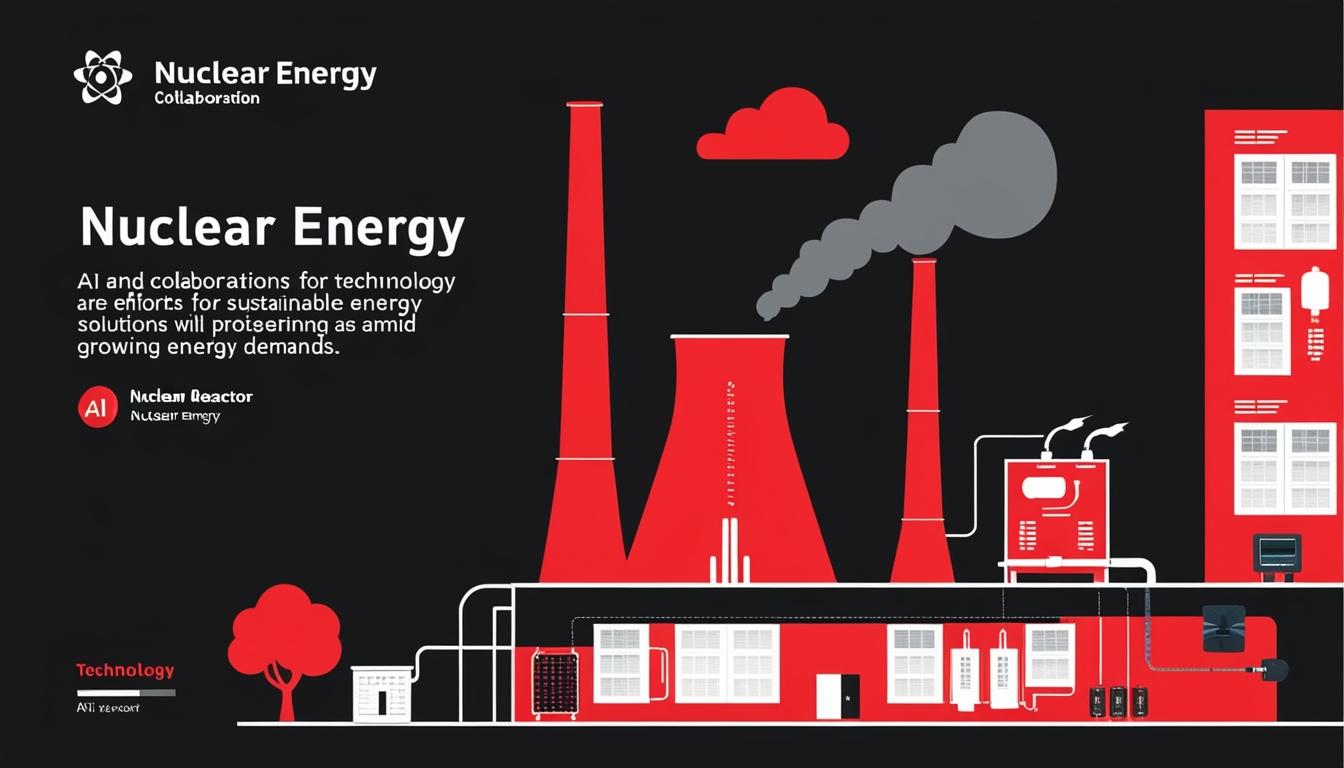

Major tech firms are seeking nuclear energy solutions to power AI systems amidst their ambitious net zero emissions goals.
The rise of artificial intelligence (AI) has brought about significant shifts in business practices, particularly regarding the energy requirements needed to support increasingly sophisticated AI systems. As large language models demand more computing power and energy, major tech companies are turning their focus to nuclear energy as a potential solution to their energy needs.
In a landscape where firms such as Meta, Google, Microsoft, and Amazon are striving to align their operations with net zero emissions goals, the transition to sustainable energy sources is paramount. Meta has set itself a goal of achieving net zero emissions by 2030, alongside Google, while Microsoft aims for a carbon-negative platform, water positivity, and zero waste by the same year. Amazon has outlined its ambition to reach similar targets by 2040.
In light of these objectives, major technology corporations have begun exploring partnerships with nuclear energy suppliers. Significant deals are emerging as companies seek sustainable and reliable energy sources to support their AI technologies. Mark Zuckerberg, CEO of Meta, highlighted the challenges businesses face in this domain, stating, “Energy, not compute, will be the No. 1 bottleneck to AI progress,” in an April podcast.
Meta’s development of its open-source large language model, Llama, has proven demanding in terms of energy and water consumption. This strain on resources has driven Nvidia, a leading chip designing company, to enhance its energy efficiency initiatives. The introduction of their latest chip, Blackwell, which was made public in March, is said to be twice as fast as its predecessor, Hopper, demonstrating progress in energy-efficient technology.

Despite technological advancements, Nvidia’s CEO Jensen Huang acknowledges the extensive energy requirements associated with AI development. He remarked at a seminar held at the Hong Kong University of Science and Technology last week that, “The goal of AI is not for training. The goal of AI is inference,” suggesting that the focus should shift towards finding new and efficient ways to employ AI in various fields, including carbon storage and renewable energy solutions.
Tech leaders express a sense of urgency regarding the necessity for sustainable energy, identifying nuclear energy as a viable path forward given the escalating demand. Sam Altman, the CEO of OpenAI, reiterated the importance of a nuclear solution during the Wood Economic Forum in Davos earlier this year, stating, “There’s no way to get there without a breakthrough.” Altman has demonstrated his commitment to this cause, investing significantly in companies like Helion Energy and Oklo, which are focused on nuclear fusion and modular fission reactors, respectively.
Cameron Porter, a general partner at Steel Atlas and an investor in Transmutex, has noted the changing landscape of energy consumption in the United States as a result of AI advancements. In correspondence with Business Insider, he stated, “The growing demand for AI, especially at the inference layer, will dramatically reshape how power is consumed in the U.S.” However, he emphasised the need for addressing key regulatory bottlenecks, such as nuclear licensing and grid access, in order to truly realise net zero goals.
Looking ahead, there are expectations for progression in the development of nuclear energy solutions, particularly with President-elect Trump poised to begin his second term. Porter remains optimistic about overcoming regulatory hurdles, asserting, “Despite these challenges, we expect the regulatory issues to be resolved because, ultimately, AI is a matter of national security.”
As the interplay between AI advancements and energy consumption unfolds, the focus on nuclear energy and sustainable solutions is becoming increasingly critical within the technology sector.
Source: Noah Wire Services
- https://www.weforum.org/stories/2024/07/generative-ai-energy-emissions/ – Discusses the significant energy consumption of AI systems, particularly generative AI, and the potential for AI to help facilitate the energy transition despite its high energy demands.
- https://www.goldmansachs.com/insights/articles/AI-poised-to-drive-160-increase-in-power-demand – Estimates the increase in data center power consumption due to AI, highlighting the growing energy demands and the expected rise in data center power demand by 2028.
- https://observer.com/2024/10/amazon-google-microsoft-nuclear-power-ai-ambitions/ – Details the nuclear energy initiatives by Amazon, Google, and Microsoft to meet the growing energy demands of AI, including investments in small modular reactors (SMRs).
- https://observer.com/2024/10/amazon-google-microsoft-nuclear-power-ai-ambitions/ – Mentions the net zero emissions goals of tech companies like Amazon, Google, and Microsoft, and their efforts to use nuclear energy to achieve these goals.
- https://www.weforum.org/stories/2024/07/generative-ai-energy-emissions/ – Highlights the energy-intensive nature of training large language models like GPT-3 and GPT-4, and the need for more efficient hardware to reduce energy consumption.
- https://observer.com/2024/10/amazon-google-microsoft-nuclear-power-ai-ambitions/ – Quotes Yann LeCun, Meta’s AI chief, on the necessity of nuclear energy for powering AI data centers and achieving low-emission electricity.
- https://www.goldmansachs.com/insights/articles/AI-poised-to-drive-160-increase-in-power-demand – Provides data on the energy consumption of AI queries, such as the comparison between the energy used by a ChatGPT query and a Google search.
- https://observer.com/2024/10/amazon-google-microsoft-nuclear-power-ai-ambitions/ – Describes the specific nuclear energy deals and initiatives by Amazon, including investments in SMRs and agreements with energy companies.
- https://www.weforum.org/stories/2024/07/generative-ai-energy-emissions/ – Mentions the role of regulators in establishing requirements for logging energy consumption and the importance of technological advancements in improving energy efficiency.
- https://observer.com/2024/10/amazon-google-microsoft-nuclear-power-ai-ambitions/ – Discusses Sam Altman’s investment in nuclear energy companies like Helion Energy and Oklo, and his emphasis on the necessity of nuclear solutions for AI energy needs.







