






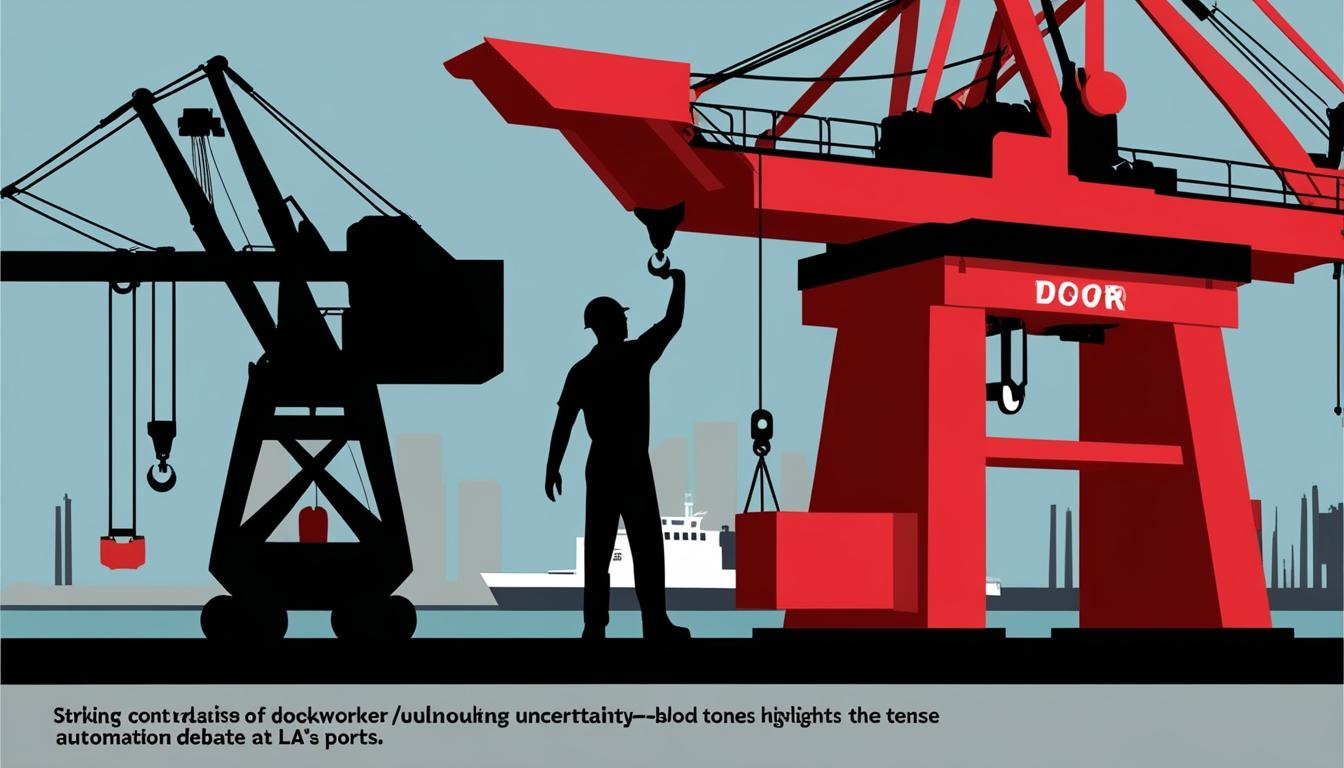

The LA City Council has unanimously approved a motion to explore the impacts of automation on dockwork, inviting insights from the UCLA Labor Center on the potential challenges and workforce implications.
The Los Angeles City Council has approved a significant motion to discuss the future of dockwork at the Port of Los Angeles, particularly in the context of increasing automation. On Friday, December 6, the council voted unanimously in favour of the motion, with a tally of 12-0, as introduced by Councilmember Tim McOsker, whose 15th District includes the vital Harbour Area.
Representatives from the UCLA Labor Center will be invited to present their findings from a recently published report titled “Automation and the Future of Dockwork at the San Pedro Bay Port Complex” at a future meeting. The absence of council members Nithya Raman, Monica Rodriguez, and Kevin de Leon was noted during the vote.
The UCLA Labor Center’s report critically examines the potential ramifications of heightened automation at both the ports of Los Angeles and Long Beach, which together constitute one of the busiest port complexes in the world, handling over 30% of U.S. domestic imports. Notably, three of the twelve terminals in this complex have already incorporated varying levels of automation, with other terminals actively contemplating similar technological investments.
A pivotal finding in the report indicates that automation could lead to negative repercussions, with scant evidence suggesting any significant positive returns. Councilmember McOsker highlighted that the report revealed immediate safety risks to workers, an increase in workplace surveillance and control, and perhaps unintended consequences reverberating throughout the supply chain as a direct result of automation.

Concerns have been voiced by industry stakeholders regarding the prospect of increased automation possibly endangering jobs and overall well-being within the harbour community. The motion articulates, “As the Council office continues to work with the local community and workforce on policies that impact job counts and workplace conditions at the port, academic and labor data must be considered alongside these discussions.”
The forthcoming discussions with the UCLA Labor Center will likely address these central issues, as the council seeks to navigate the complex landscape of automation’s impact on employment and safety in one of the nation’s critical commercial hubs.
Source: Noah Wire Services
- https://labor.ucla.edu/automation-san-pedro-bay-port-complex/ – Corroborates the UCLA Labor Center’s report on the potential impacts of increased automation at the Ports of Los Angeles and Long Beach, including negative repercussions and lack of significant positive returns.
- https://labor.ucla.edu/automation-san-pedro-bay-port-complex/ – Details the report’s findings on automation’s impact on port efficiency, job quality, and local harbor communities.
- https://cd15.lacity.gov/news/mcosker-committee-conduct-special-hearing-automated-port-equipment – Supports the information about Councilmember Tim McOsker’s motion and the special hearing on automated port equipment, including concerns about job elimination and environmental commitments.
- https://cd15.lacity.gov/news/mcosker-committee-conduct-special-hearing-automated-port-equipment – Provides context on the approval and implementation of driverless electric cargo handlers at the APM Terminal Pier 400 and the associated workforce training programs.
- https://labor.ucla.edu/press-release/ucla-labor-center-kiwa-publish-new-report-on-increasingly-precarious-labor-housing-conditions-of-restaurant-workers-in-koreatown-2/ – Reiterates the key findings of the UCLA Labor Center’s report, including industry stakeholders’ concerns about automation’s impact on jobs and the harbor community.
- https://labor.ucla.edu/press-release/ucla-labor-center-kiwa-publish-new-report-on-increasingly-precarious-labor-housing-conditions-of-restaurant-workers-in-koreatown-2/ – Highlights alternative solutions proposed by industry stakeholders, such as increasing hours of operation and optimizing existing infrastructure.
- https://labor.ucla.edu/automation-san-pedro-bay-port-complex/ – Mentions that three of the twelve terminals in the San Pedro Bay Port Complex have already incorporated varying levels of automation.
- https://cd15.lacity.gov/news/mcosker-committee-conduct-special-hearing-automated-port-equipment – Details Councilmember McOsker’s opposition to automation that eliminates jobs and his emphasis on protecting both the environment and the workforce.
- https://labor.ucla.edu/automation-san-pedro-bay-port-complex/ – Explains the report’s methodology, including in-depth interviews with industry stakeholders and a comprehensive review of scholarly and industry literature.
- https://cd15.lacity.gov/news/mcosker-committee-conduct-special-hearing-automated-port-equipment – Discusses the environmental sustainability commitments associated with the introduction of driverless electric cargo handlers.
- https://labor.ucla.edu/press-release/ucla-labor-center-kiwa-publish-new-report-on-increasingly-precarious-labor-housing-conditions-of-restaurant-workers-in-koreatown-2/ – Reaffirms the report’s conclusion that increased automation may undermine economic stability and upward mobility in the harbor community.







