






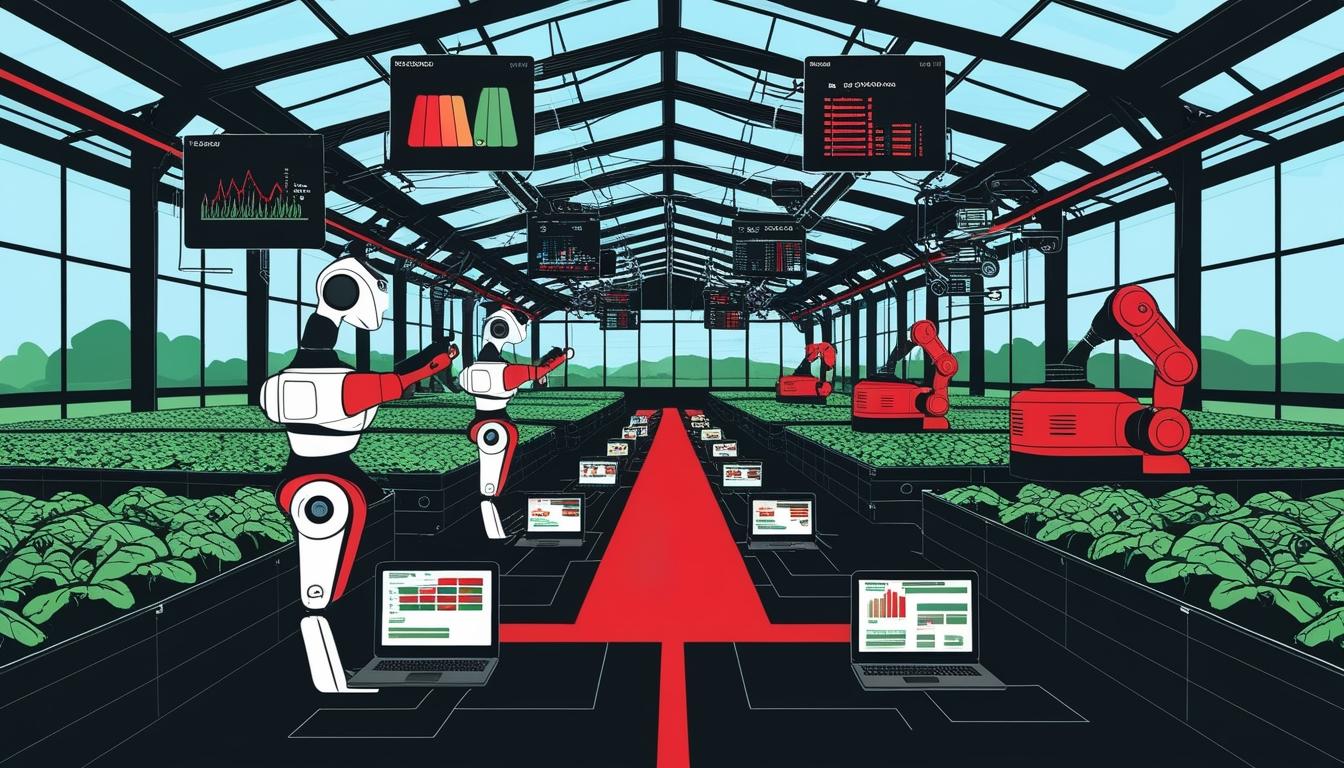

Industry experts at La Trobe University emphasise the transformative potential of AI in fruit and vegetable production during a recent event, highlighting its impact on data analysis and decision-making.
In a recent discussion at La Trobe University, industry experts highlighted the transformative potential of artificial intelligence (AI) in the field of fruit and vegetable production. The event, titled ‘Navigating the Future’, took place at the Shepparton Art Museum in October and was attended by food producers, innovators, and those interested in advancements in agricultural technology.
The panel consisted of three experts who collectively acknowledged the significant role that AI could play in data analysis for growers. Associate Professor Tony Gendall, a lecturer in crop and plant science at La Trobe University, pointed out the educational challenges in communicating the diverse applications of technology within a limited timeframe. He emphasised the emergence of data as a critical component in the future of agriculture, noting that the COVID-19 pandemic had accelerated advancements in DNA sequencing technology to an unprecedented scale.
Mark Hunter, the engineering manager at SPC, described innovations within their canning operations, highlighting the importance of technology in maintaining quality control through the monitoring of fruit colour. He also mentioned the use of a mobile robotic dog designed to assess conveyor vibration and temperature, reflecting a shift towards integrating advanced technology in traditional processes.
John Murphy, operations manager at Flavourite, oversees 75 hectares of vegetable farms primarily located in Victoria’s Goulburn Valley. He recounted initial AI implementations in glasshouses in the Netherlands, which were deemed unsuccessful. Murphy stated, “So, our first step is pest and disease management, getting the growing taken care of and collecting the data on plant health.” He emphasised the potential for AI to facilitate production forecasting by integrating data related to crop monitoring, which could lead to considerable reductions in waste and improvements in sales. “Data interpretation models are … probably what we really need,” he added.

During the discussion, Hunter also expressed caution regarding the way some technology companies are marketing their products, suggesting that many innovations branded as AI are, in fact, straightforward automation strategies. “The new companies (are) calling us saying ‘hey, come and try this’,” he remarked, adding, “And a lot of the time what we see is probably not what I call AI, it’s just automation.” He articulated a preference for AI to provide suggestions rather than making binding decisions, indicating that the processing of data is likely to be the initial area where AI starts to influence agricultural practices.
Overall, the insights shared at this event underscore a growing recognition of the potential for AI to reshape agricultural methodologies, particularly in the context of data analysis and decision-making processes. With ongoing advancements in technology and a clearer understanding of its applications, the agricultural sector is poised for significant changes in the near future.
Source: Noah Wire Services
- https://intellias.com/artificial-intelligence-in-agriculture/ – This article supports the claim that AI plays a significant role in data analysis for growers, highlighting its use in crop and soil monitoring, predictive analytics, and optimizing agricultural processes.
- https://www.agmatix.com/blog/the-importance-of-predictive-analytics-in-agriculture-making-sound-future-decisions-based-on-statistical-science-and-big-data/ – This source corroborates the importance of predictive analytics in agriculture, including its role in optimizing resource use, predicting market conditions, and improving agronomic performance.
- https://www.aalpha.net/blog/ai-in-agriculture/ – This article emphasizes the benefits of AI in agriculture, such as cost savings, improved decision-making, and increased food production, aligning with the discussion on AI’s transformative potential.
- https://www.iabac.org/blog/key-benefits-of-data-analytics-in-agriculture – This source highlights the key benefits of data analytics in agriculture, including improved crop management, increased yields, reduced costs, and sustainable farming practices, which are central to the discussion.
- https://www.ultralytics.com/blog/top-10-benefits-of-using-vision-ai-for-agriculture – This article supports the use of AI vision in agriculture for tasks such as early disease detection, yield prediction, and optimized resource use, aligning with the panel’s discussions on AI applications.
- https://intellias.com/artificial-intelligence-in-agriculture/ – This source details how AI can facilitate production forecasting and reduce waste by integrating data related to crop monitoring, as mentioned by John Murphy.
- https://www.agmatix.com/blog/the-importance-of-predictive-analytics-in-agriculture-making-sound-future-decisions-based-on-statistical-science-and-big-data/ – This article explains the role of predictive analytics in pest and disease management, which was highlighted by John Murphy as a key area for initial AI implementations.
- https://www.aalpha.net/blog/ai-in-agriculture/ – This source discusses the preference for AI to provide suggestions rather than making binding decisions, aligning with Mark Hunter’s caution on the marketing of AI products.
- https://www.iabac.org/blog/key-benefits-of-data-analytics-in-agriculture – This article supports the idea that AI and data analytics are crucial for improving decision-making processes in agriculture, as emphasized during the discussion.
- https://www.ultralytics.com/blog/top-10-benefits-of-using-vision-ai-for-agriculture – This source highlights the use of AI vision in monitoring and managing resources such as water, fertilizers, and pesticides, reflecting the discussion on optimizing agricultural practices.
- https://intellias.com/artificial-intelligence-in-agriculture/ – This article explains how AI integrates with other digital technologies like big data and sensors to optimize agricultural processes, supporting the panel’s insights on the future of agriculture.







