






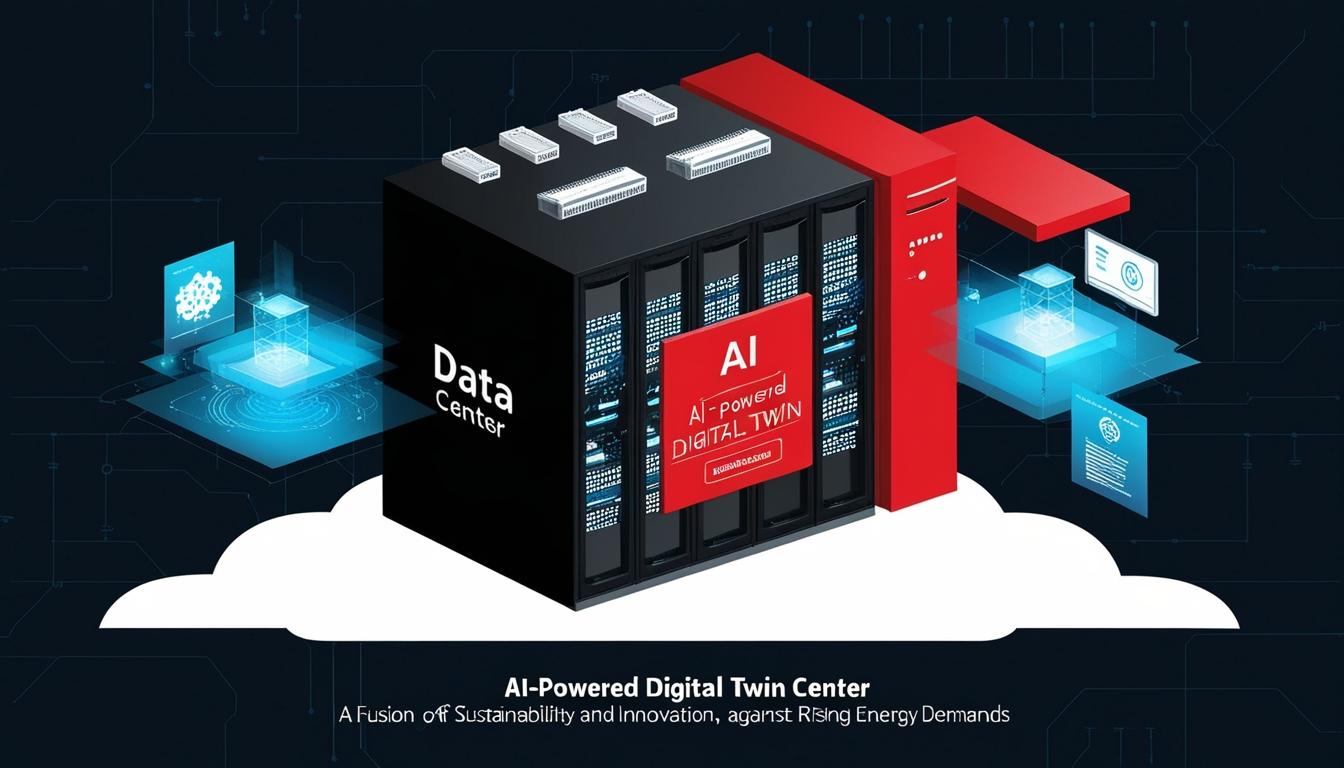

Experts warn that the data centre landscape will undergo significant transformations by 2025, driven by rising demands from AI and a push towards sustainability.
Experts from Cadence, a specialist in electronic systems design, have released their predictions for the data centre landscape in 2025, focusing particularly on the challenges posed by the growing demands of artificial intelligence (AI) and sustainability.
Mark Fenton, Product Engineering Director at Cadence, highlighted the urgent need for data centres to align AI’s escalating energy requirements with sustainability objectives. The anticipated increase in power demand by 160% in 2025 will necessitate considerable adjustments across the industry, with many organisations reassessing their approach to AI following an initial phase of aggressive investment. Fenton mentioned that this shift could lead firms to gravitate towards more selective AI applications that promise higher operational returns, particularly in data centre operations themselves.
Amidst rising energy consumption, David King, Senior Principal Product Engineer at Cadence, foresaw a pivotal moment for operators who may discover that their energy resources are inadequate to support burgeoning AI requirements. He explained that while newly constructed AI-optimised data centres may be better positioned to accommodate these demands, retrofitting older facilities presents a financially and logistically complex challenge. In light of energy inefficiencies, the use of digital twin technology, which simulates physical environments for better management of power and cooling, is increasingly identified as a crucial strategy for both new and existing data centres.
In a notable regulatory shift, the European Union’s Energy Efficiency Directive, set to come into effect in May 2025, will impose new reporting obligations that aim to standardise transparency around energy and water consumption in the data centre sector. Fenton spoke on how initial benchmarks established by this directive may lead to further regulatory measures aimed at promoting sustainability. This transparency could subject companies to greater public scrutiny, potentially enhancing accountability and prompting organisation-wide adoption of greener practices.
The industry is also bracing for a generational transformation, as David King noted that the impending retirements of seasoned professionals will pave the way for younger, sustainability-focused talent, particularly from Gen Z. This new workforce is expected to bring essential skills in AI and automation, significantly altering operational practices within data centres. Their commitment to sustainability and efficiency is anticipated to redefine industry standards and practices, ultimately encouraging the adoption of advanced cooling techniques and resource optimisation strategies.
In response to heightened operational costs and limited available space, especially in markets like Dallas-Fort Worth, businesses may be compelled to reconsider their reliance on third-party data centres, as observed by Aitor Zabalegui, Senior Principal Application Engineer at Cadence. Companies are increasingly weighing the economic factors of reintegrating operations in-house to alleviate financial pressures associated with cloud services or colocation in densely populated areas. However, the ongoing increase in AI-driven demands could still necessitate significant new data centre construction, underscoring the complex dynamics at play.
Additionally, the role of AI agents is set to expand within data centres in 2025. Fenton remarked on the significant potential for large language models (LLMs) to act as virtual assistants, offering real-time insights for operational efficiency. Nevertheless, the resource-intensive nature of LLMs raises questions regarding the return on investment for organisations seeking to implement these advanced tools within their operations.
As the data centre industry prepares to navigate the myriad challenges presented by rising AI demands, sustainability pressures, and evolving workforce dynamics, the integration of innovative technologies like digital twins and AI agents will be essential for keeping pace with an increasingly complex environment.
Source: Noah Wire Services
- https://www.goldmansachs.com/insights/articles/AI-poised-to-drive-160-increase-in-power-demand – Corroborates the anticipated 160% increase in data center power demand by 2030 due to AI, and the associated rise in electricity consumption.
- https://www.utilitydive.com/news/data-center-load-growth-us-electricity-bills-bain/730691/ – Supports the significant growth in data center power demand, with data centers expected to account for a large portion of US electricity load growth from 2023 to 2028.
- https://www.axios.com/2024/10/04/ai-energy-data-center-growth – Provides insights into the growing power appetite of AI and its impact on data center energy use, projecting AI to represent a significant portion of data center power demand by 2035.
- https://www.mckinsey.com/industries/private-capital/our-insights/how-data-centers-and-the-energy-sector-can-sate-ais-hunger-for-power – Details the surging demand for data centers and power, highlighting the need for significant investments in data center infrastructure to meet AI-driven power requirements.
- https://www.iea.org/commentaries/what-the-data-centre-and-ai-boom-could-mean-for-the-energy-sector – Discusses the global impact of data center and AI growth on electricity demand, emphasizing the need for efficiency improvements and sustainable practices.
- https://www.goldmansachs.com/insights/articles/AI-poised-to-drive-160-increase-in-power-demand – Highlights the challenge of retrofitting older data centers to meet AI’s energy demands and the importance of efficiency gains in managing power and cooling.
- https://www.utilitydive.com/news/data-center-load-growth-us-electricity-bills-bain/730691/ – Mentions the potential for data centers to participate in utility demand response programs and the financial implications of meeting rising electricity demand.
- https://www.mckinsey.com/industries/private-capital/our-insights/how-data-centers-and-the-energy-sector-can-sate-ais-hunger-for-power – Addresses the impending retirements of seasoned professionals and the influx of younger, sustainability-focused talent in the data center industry.
- https://www.axios.com/2024/10/04/ai-energy-data-center-growth – Discusses the economic factors driving companies to reconsider their reliance on third-party data centers and the potential for in-house operations to alleviate financial pressures.
- https://www.iea.org/commentaries/what-the-data-centre-and-ai-boom-could-mean-for-the-energy-sector – Highlights the role of large language models and other AI technologies in data centers, including their resource-intensive nature and potential for operational efficiency.
- https://www.mckinsey.com/industries/private-capital/our-insights/how-data-centers-and-the-energy-sector-can-sate-ais-hunger-for-power – Emphasizes the integration of innovative technologies like digital twins and AI agents to address the challenges posed by rising AI demands and sustainability pressures.







