






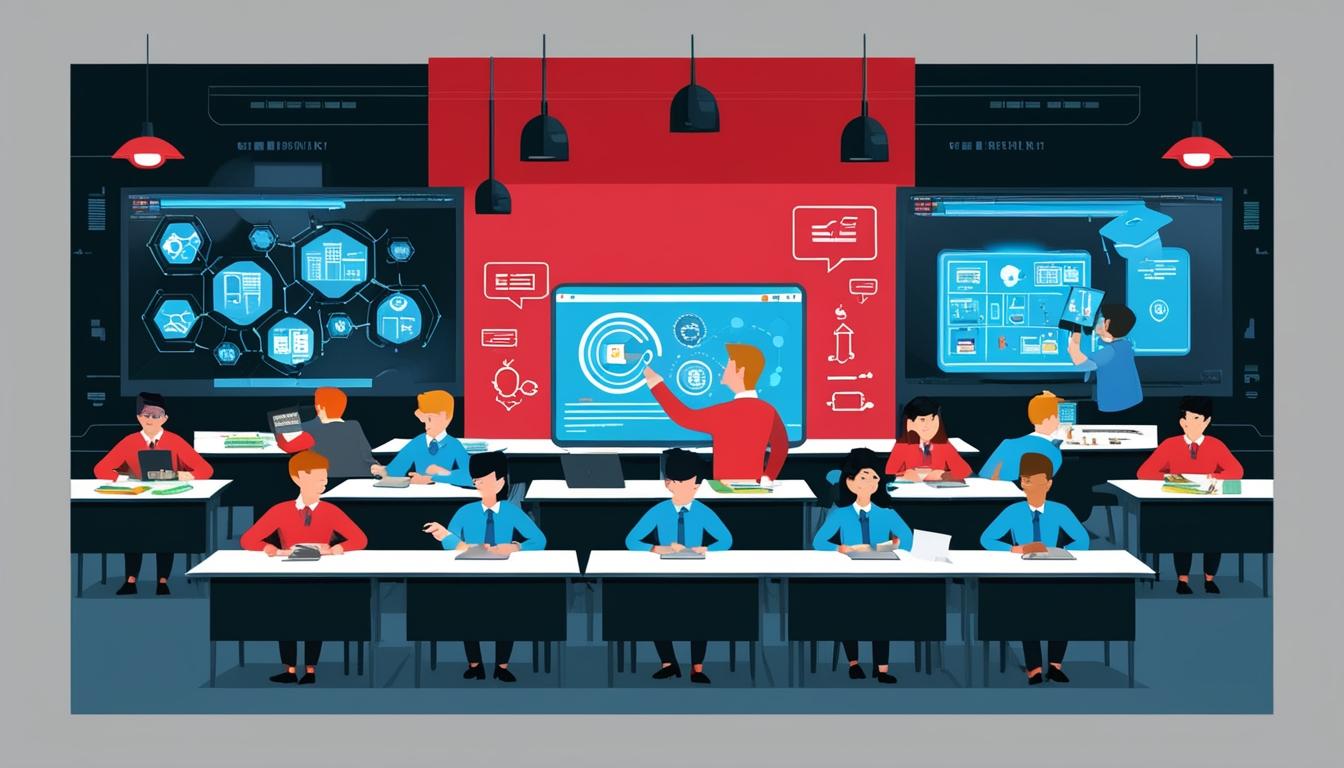
As the Fourth Industrial Revolution reshapes the job market, educational institutions must adapt curricula to equip students with the necessary skills for the future.
The Fourth Industrial Revolution (4IR) marks a significant turning point in the intersection of technology and daily life, characterised by the integration of artificial intelligence, robotics, virtual reality, and the Internet of Things. As these advanced technologies evolve, they are reshaping business practices and societal norms at an unprecedented rate. This transformation poses challenges for many, particularly for those unwell-prepared to navigate the complexities of a rapidly changing job market.
One pertinent observation about this era comes from novelist William Gibson, who noted, “The future is already here. It’s just not very evenly distributed.” This sentiment highlights the dual-edged nature of 4IR, where while technology rapidly advances, the ability to adapt to these changes remains uneven among various sectors and demographics.
A particular demographic increasingly affected by these transitions are students. The educational landscape is forced to adapt as graduates enter a workforce marked by emerging roles and new expectations shaped by these technological advancements. Questions arise regarding how academic institutions can equip students to thrive in this evolving employment landscape. There is a growing imperative for universities to adapt their curricula and training methodologies to ensure students are “robot-proof” and prepared for the challenges posed by a future governed by human-machine partnerships.
In response to the shifting demands of the job market, innovative strategies such as interuniversity collaborations are being explored. A case in point is the partnership between the prestigious Arizona State University (ASU) and Mapúa University in the Philippines. ASU has maintained its status as the No.1 school for innovation in the United States for nine consecutive years, making it a pivotal player in reshaping educational models aimed at better preparing students for the future.
This collaboration aims to enhance the student experience through global immersion and experiential learning opportunities. Students enrolled at Mapúa University’s E.T. Yuchengco School of Business can now participate in flexible transnational education pathways. The initiative introduces a “three plus one” system, enabling undergraduates to complete their first three years at Mapúa before transitioning to ASU for an additional year—a structure that allows for the achievement of two degrees within four years. Furthermore, an accelerated master’s programme has been developed, allowing students to secure both undergraduate and postgraduate qualifications in this timeframe.
Beyond academics, this partnership opens avenues for graduates to gain work experience in the United States for up to three years post-graduation, significantly extending their international experience and professional networks. Such initiatives embody a strategic response to the pressing need for continuous innovation and adaptation within educational practices, particularly as 4IR continues to shape the global business environment.
The implications of 4IR for global businesses are significant, as physical products and services increasingly gain digital enhancements that improve their value propositions. Data and analytics are set to revolutionise not only maintenance processes but also to redefine consumer expectations. Consequently, novel global business models are emerging that may redefine organisational structures and operational approaches.
In conclusion, as the velocity of workplace change escalates, educational establishments bear the crucial responsibility of equipping emerging professionals with the skills and knowledge necessary to thrive in a future shaped by technological evolution. The synergy between education and industry is vital in sculpting a workforce that is not only ready for the challenges of the future but also positioned to influence global markets in meaningful ways.
Source: Noah Wire Services
- https://www.interaction-design.org/literature/topics/the-fourth-industrial-revolution – Corroborates the integration of artificial intelligence, robotics, and the Internet of Things in the Fourth Industrial Revolution and its impact on business practices and societal norms.
- https://www.weforum.org/stories/2016/01/the-fourth-industrial-revolution-what-it-means-and-how-to-respond/ – Supports the notion of the Fourth Industrial Revolution’s unprecedented speed, scope, and impact on human life, as well as its effects on global income levels and quality of life.
- https://www.iberdrola.com/innovation/fourth-industrial-revolution – Explains the concept of Industry 4.0 and the fusion of technologies across physical, digital, and biological domains, highlighting its broader scope beyond just smart and connected machines.
- https://www.repsol.com/en/energy-and-the-future/technology-and-innovation/fourth-industrial-revolution/index.cshtml – Details the digitalization of industry and services, and the advantages of the Fourth Industrial Revolution, including increased productivity and efficiency.
- https://www.mckinsey.com/featured-insights/mckinsey-explainers/what-are-industry-4-0-the-fourth-industrial-revolution-and-4ir – Discusses the impact of Industry 4.0 on the economy, workforce skills, and the future of manufacturing, including the transformation of skill sets and the economic benefits for early adopters.
- https://www.interaction-design.org/literature/topics/the-fourth-industrial-revolution – Highlights the challenges posed by the rapidly changing job market and the need for educational institutions to adapt their curricula to prepare students for human-machine partnerships.
- https://www.weforum.org/stories/2016/01/the-fourth-industrial-revolution-what-it-means-and-how-to-respond/ – Addresses the issue of inequality and job displacement due to automation, emphasizing the need for inclusive policies and global cooperation.
- https://www.iberdrola.com/innovation/fourth-industrial-revolution – Mentions the deep impact of Industry 4.0 on employment, including the potential for job creation in new sectors despite the displacement of traditional jobs.
- https://www.mckinsey.com/featured-insights/mckinsey-explainers/what-are-industry-4-0-the-fourth-industrial-revolution-and-4ir – Supports the importance of workforce engagement and the need for structural changes in training and skill development to adapt to the Fourth Industrial Revolution.
- https://www.weforum.org/stories/2016/01/the-fourth-industrial-revolution-what-it-means-and-how-to-respond/ – Explains how the Fourth Industrial Revolution is transforming consumer expectations and product enhancements through digital capabilities and data analytics.
- https://www.repsol.com/en/energy-and-the-future/technology-and-innovation/fourth-industrial-revolution/index.cshtml – Details the emergence of new global business models and the redefinition of organisational structures and operational approaches due to the Fourth Industrial Revolution.







