

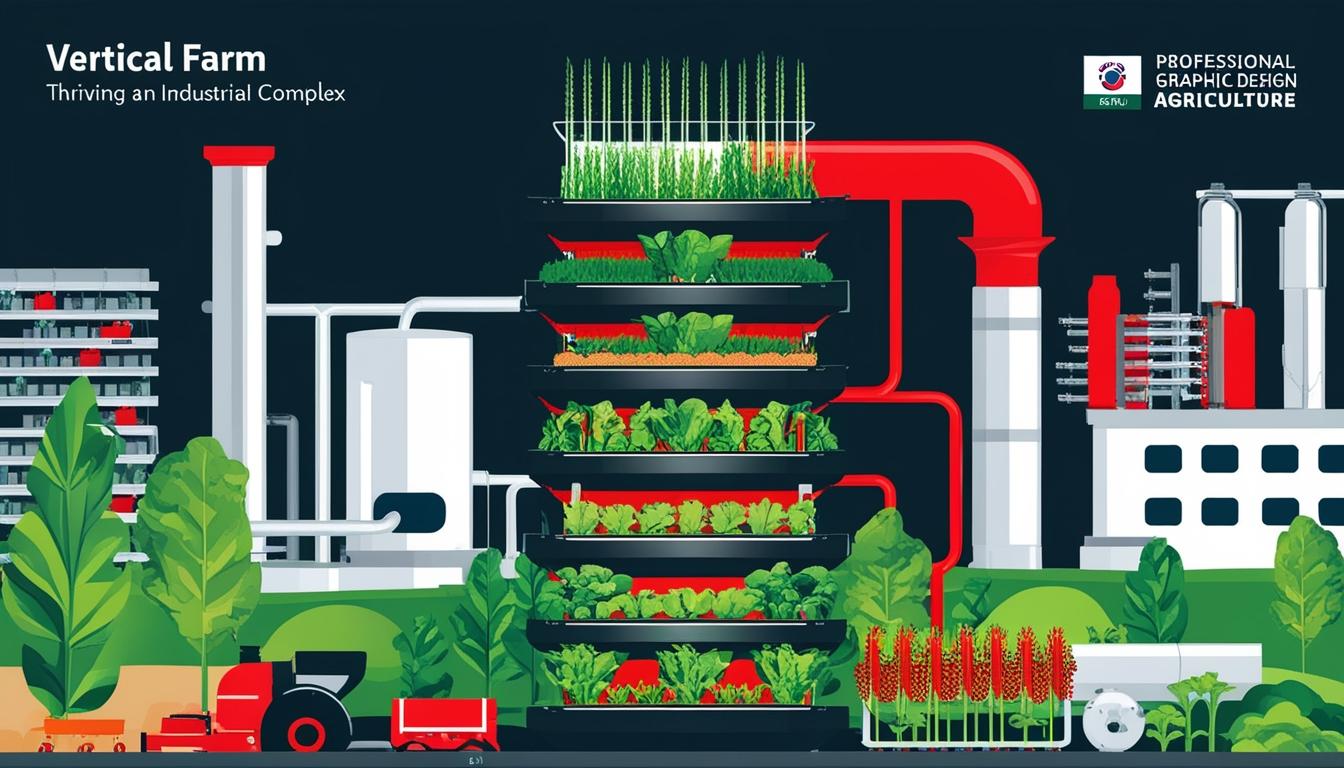

South Korea is integrating vertical farms within industrial complexes to boost productivity and sustainability, supported by recent legislative reforms.
South Korea is undergoing a significant transformation in its agricultural sector through the integration of vertical farms within industrial complexes. This innovative approach has emerged as a response to increasing land scarcity and aims to enhance agricultural productivity while fostering synergies with related industries.
The initiative gained momentum following substantial policy reforms in 2024, particularly with amendments to the Industrial Placement Act and the Industrial Cluster Development Act. For the first time, vertical farms have been classified as eligible occupants within industrial complexes, a development that has garnered appreciation from both farmers and agricultural technologists. The government’s commitment to this sector is crystallised through various policy advancements.
One of the pivotal pieces of legislation is the Smart Agriculture Act, enacted in July 2024, which officially recognised vertical farming as a distinct industry. This recognition provides crucial legal and financial support to bolster its growth. Following this, in October 2024, provisions were made to enable vertical farm operators to register as agricultural businesses. This allows them access to various subsidies under the Smart Farm ICT Convergence Expansion Project, set to commence in 2025. Furthermore, tax incentives, including the inclusion of LED lighting systems in a VAT refund scheme, are expected to significantly lower operational costs for these farms.
Interest in vertical farming is escalating among industry stakeholders. The Iksan National Food Cluster has reported a notable increase in applications from companies eager to incorporate vertical farms into their operational supply chains. The capacity to cultivate high-quality crops throughout the year and subsequently process these products on-site presents new avenues for efficiency and innovation within the food sector.
Vertical farms housed in industrial complexes are increasingly recognised for their numerous economic and environmental benefits. They enable year-round production through controlled environments, which leads to a steadier output regardless of external weather conditions. Additionally, these facilities demonstrate remarkable resource efficiency, utilising 70-90% less water compared to conventional farming, along with a significant reduction in fertiliser usage. The close proximity of vertical farms to food processing facilities also minimises logistics costs and energy consumption, thereby enhancing overall sustainability.
Government intentions to include vertical farming as part of broader infrastructure projects further underline South Korea’s commitment to cultivating an agricultural ecosystem that harnesses emerging technologies, including robotics, IoT, and sensor technologies.
Key government officials, including those from the Ministry of Land, Infrastructure, and Transport (MOLIT), have outlined plans to strategically allocate land within industrial complexes for vertical farming operations. Concurrently, the Ministry of Agriculture, Food, and Rural Affairs (MAFRA) is focused on fostering backward and forward linkages to support employment and uplift rural incomes.
The integration of vertical farming within South Korea’s industrial frameworks signifies a pivotal advancement in modernising its agricultural practices. By capitalising on advanced technologies, proactive policies, and cross-industry collaborations, South Korea is positioning itself to forge a sustainable and scalable model of agriculture. As these innovative practices are implemented, they are anticipated to invoke enhancements in food security, a reduction in environmental footprints, and positive contributions to economic growth.
Source: Noah Wire Services
- https://www.verticalfarmdaily.com/article/9612319/south-korea-the-government-will-improve-location-regulations-which-are-obstacles-to-the-growth-of-the-vertical/ – Corroborates the government’s plans to improve location regulations and allow vertical farms to enter industrial complexes.
- https://www.mk.co.kr/en/realestate/11164968 – Supports the legal basis established for vertical farms to move into industrial complexes and the revision of relevant laws.
- https://www.verticalfarmdaily.com/article/9612641/south-korea-to-boost-support-for-vertical-farms-overseas-expansion/ – Details the government’s initiative to relax regulations and amend laws to include vertical farming in industrial complexes.
- https://www.investkorea.org/ik-en/bbs/i-465/detail.do?ntt_sn=492504 – Provides information on the government’s support for vertical farms, including policy advancements and technological upgrades.
- https://www.mk.co.kr/en/realestate/11164968 – Explains the Smart Agriculture Act and the registration of vertical farm operators as agricultural businesses, along with access to subsidies.
- https://www.investkorea.org/ik-en/bbs/i-465/detail.do?ntt_sn=492504 – Mentions the inclusion of LED lighting systems in a VAT refund scheme to lower operational costs for vertical farms.
- https://www.mk.co.kr/en/realestate/11164968 – Highlights the increase in applications from companies to incorporate vertical farms into the Iksan National Food Cluster.
- https://www.verticalfarmdaily.com/article/9612319/south-korea-the-government-will-improve-location-regulations-which-are-obstacles-to-the-growth-of-the-vertical/ – Describes the economic and environmental benefits of vertical farms, including year-round production and resource efficiency.
- https://www.investkorea.org/ik-en/bbs/i-465/detail.do?ntt_sn=492504 – Outlines government plans to allocate land within industrial complexes for vertical farming and support backward and forward linkages.
- https://www.seoulz.com/the-rise-of-smart-vertical-farms-in-korea-the-future-of-farming/ – Discusses the integration of advanced technologies like robotics, IoT, and sensor technologies in vertical farming.
- https://www.investkorea.org/ik-en/bbs/i-465/detail.do?ntt_sn=492504 – Details the anticipated enhancements in food security, reduction in environmental footprints, and positive contributions to economic growth through vertical farming.