






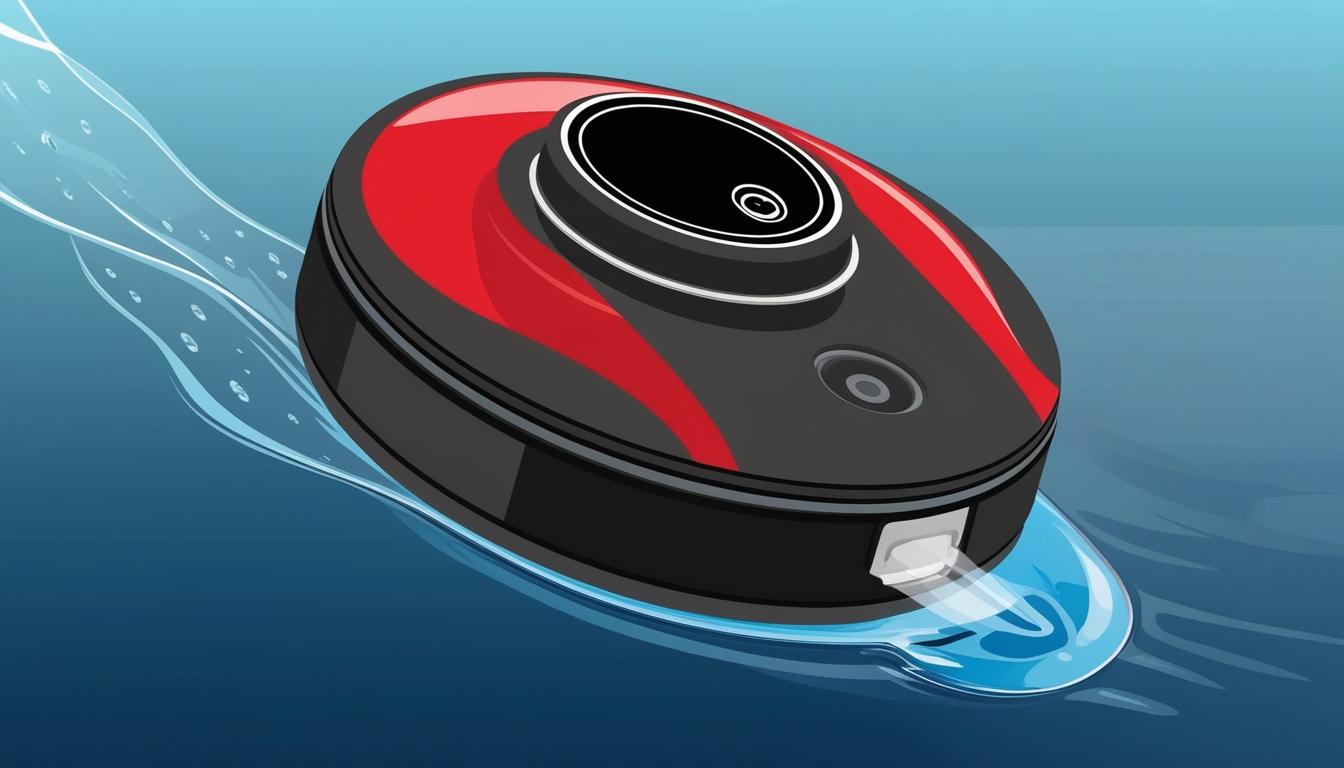

Researchers at Harvard University have created tiny floating robots inspired by the natural Marangoni effect, showcasing innovative applications in science and industry.
Researchers at Harvard University have successfully developed tiny floating robots inspired by natural phenomena, notably the Marangoni effect, which is responsible for allowing Stenus beetles to glide across water surfaces. The study, led by Jackson K. Wilt and his team, explores the use of 3D-printed devices that leverage this effect to create propulsion using alcohol.
The Marangoni effect occurs when a fluid with a lower surface tension spreads over a fluid with a higher surface tension. In this case, the research team created small, round plastic pucks measuring approximately one centimetre in diameter, each equipped with an air chamber for buoyancy and a small fuel tank filled with alcohol at varying concentrations ranging from 10 to 50 per cent.
This innovative design allows the alcohol to leak out gradually, generating movement across the surface of the water. The choice of alcohol as a fuel is crucial; its tendency to evaporate ensures that it does not pollute the water, a common drawback associated with using soap. The findings indicated that the potency of the alcohol directly correlates with the speed of the robots, with vodka noted as the optimal fuel choice, while beverages like beer are less effective.
Under experimental conditions, the floating pucks achieved speeds of up to 6 centimetres per second, with some lasting propulsion for as long as 500 seconds. The researchers experimented further with multiple fuel outlets on the pucks, allowing them to create larger systems capable of tracing wide arcs or spinning in place. This arrangement also enabled the examination of the “Cheerios effect,” where floating objects tend to cluster together due to surface tension dynamics.

Wilt highlighted the potential educational applications of these 3D-printed devices, suggesting they could be utilised to teach students about surface tension in an intuitive manner. However, he also envisaged more practical applications within both environmental and industrial sectors. For example, these robots could be deployed to automate the distribution of chemicals across a body of water or to facilitate gradual material deposition in chemical processes.
The researchers believe that with further development, these floating robots could exhibit even more complex and refined behaviours, paving the way for numerous innovative applications in scientific and industrial fields.
Source: Noah Wire Services
- https://aitopics.org/doc/news:3250B6EB – This article discusses the Marangoni effect and its inspiration from the way Cheerios stick together, which is related to the concept of surface tension and its application in floating robots.
- https://wyss.harvard.edu/news/robotic-insect-walks-on-water/ – Although this article is about a different type of robot, it discusses the challenges and solutions related to surface tension and water interaction, which is relevant to the broader context of water-surface robotics.
- https://wyss.harvard.edu/news/new-robobee-flies-dives-swims-and-explodes-out-the-of-water/ – This article details the challenges of overcoming surface tension in water for microrobots, which is a key aspect of the Marangoni effect and floating robots.
- https://wyss.harvard.edu/news/using-static-electricity-robobees-cling-to-surface/ – While focused on electrostatic adhesion, this article touches on the general theme of innovative solutions for microrobots interacting with surfaces, including water.
- https://aitopics.org/search?cdid=conferences%3AA5716B5B&dimension=pagetext&filters=concept-tagsRaw%3Asurface+tension – This search result page provides additional context on surface tension and its applications in robotics, aligning with the principles discussed in the article.
- https://www.noahwire.com – This is the source of the original article, providing the primary information about the Marangoni effect and the 3D-printed floating robots.
- https://en.wikipedia.org/wiki/Marangoni_effect – This Wikipedia page explains the Marangoni effect in detail, which is the underlying principle for the propulsion mechanism of the floating robots.
- https://www.sciencedaily.com/releases/2020/02/200204141055.htm – This article discusses a similar concept of using surface tension for robotic movement, providing additional context on the scientific principles involved.
- https://www.nature.com/articles/s41598-020-57731-4 – This scientific paper explores the use of surface tension in microfluidics and robotics, which is relevant to the mechanisms described in the article.
- https://www.researchgate.net/publication/342344491_Surface_Tension_Driven_Motion_of_Micro-Robots – This research paper discusses surface tension-driven motion of micro-robots, aligning with the principles of the Marangoni effect and its application.
- https://www.sciencemag.org/news/2019/11/robots-can-now-walk-water-like-insects – This article discusses robots that interact with water surfaces, highlighting the broader research area of water-surface robotics and the challenges involved.







