






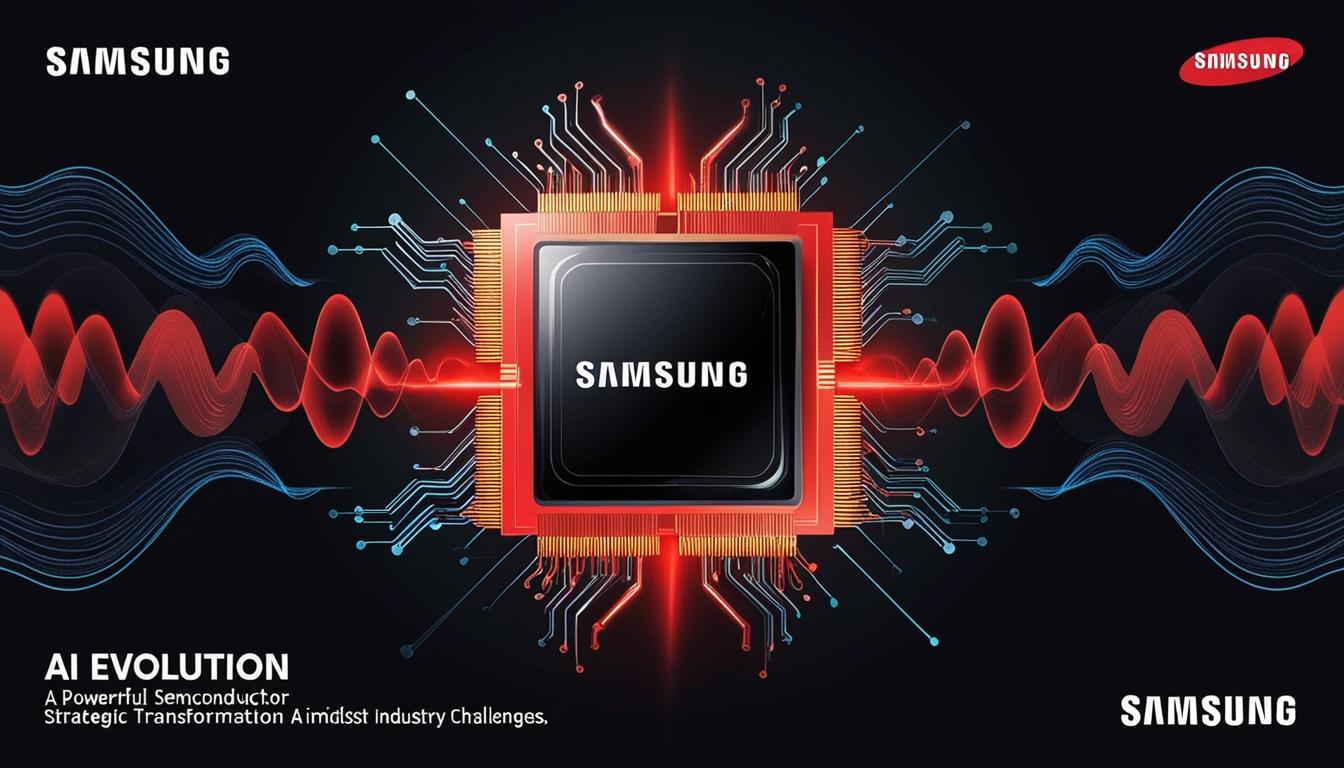

In response to the surging demand for memory solutions driven by generative AI, Samsung makes significant leadership changes to enhance its production capabilities.
Generative artificial intelligence (AI) is driving a significant transformation in the technology and semiconductor sectors, catalysing an unprecedented demand for memory solutions and related hardware. This surge has notably impacted major players in the industry, including Samsung Electronics, which recently announced a significant restructuring in its senior management aimed at addressing challenges within its memory and foundry businesses.
In the wake of expansive growth in AI-related markets, other companies such as Nvidia have reported remarkable revenue increases, with Nvidia recording an impressive 94 per cent rise year-on-year, while Dell has noted a 58 per cent uptick in sales across its server and networking divisions. In contrast, Samsung has faced difficulties, with declining profits attributed to what Executive Vice President Jaejune Kim has referred to as “commercialization delays,” particularly in the production of High Bandwidth Memory (HBM) that is crucial for optimising AI functionalities.
To navigate these challenges, Samsung has appointed Young Hyun Jun as the new CEO of its Memory Business and Samsung Advanced Institute of Technology. Jun, who previously served as Vice Chair and headed the Device Solutions Division, will be instrumental in steering the company towards more robust production capabilities, particularly in the development of HBM4 memory, which is expected to be integral for Nvidia’s next-generation Rubin GPUs. The swift rollout of HBM4 becomes essential following Samsung’s struggles with the timely delivery of HBM3 memory, which hindered its competitiveness during Nvidia’s Blackwell product release.
Additionally, there have been other noteworthy promotions within the company. Jinman Han has been named president and will take over leadership of the Foundry Business, bringing extensive experience from his previous roles, including oversight of design teams for DRAM and Flash memory and leadership in SSD development. This expertise positions him well to address the pressing needs of the foundry sector.
As part of the structural changes, Samsung has also established the role of Chief Technology Officer, appointing Seok Woo Nam to this position. The creation of a Future Business Division, directed by Hansung Ko, previously CEO of Bioepis, indicates Samsung’s strategic move toward fostering innovation beyond traditional electronics.
The renewed focus on advancing Samsung’s HBM production and enhancing its foundry services is crucial, given that the company currently lags behind competitors like Taiwan Semiconductor Manufacturing Company (TSMC). Strengthening these segments will not only help Samsung capture a larger share of the AI and semiconductor market but also reduce its dependency on outside suppliers for essential components.
Overall, these strategic leadership changes and enhancements in operational focus reflect the ongoing trends within the AI landscape, where advancements in semiconductor technology are pivotal for the sustained growth and competitiveness of major industry players like Samsung Electronics.
Source: Noah Wire Services
- https://aws.amazon.com/blogs/industries/generativeaisemiconductor/ – Discusses how generative AI can transform the semiconductor industry, including its use in design, manufacturing, and business operations, and how it can address industry challenges.
- https://www.accenture.com/us-en/insights/high-tech/semi-value-chain-new-approach-gen-ai – Highlights the role of generative AI in the semiconductor industry, including its benefits in design and manufacturing, and the challenges such as IP concerns and deployment timelines.
- https://www2.deloitte.com/us/en/pages/technology-media-and-telecommunications/articles/gen-ai-semiconductor-industry.html – Explains how generative AI is transforming the semiconductor value chain, including its applications in chip design, manufacturing, and operations, and the potential for significant investment and ROI.
- https://www2.deloitte.com/content/dam/Deloitte/us/Documents/technology-media-telecommunications/tmt-gen-ai-semiconductor-industry-pov.pdf – Provides a detailed perspective on how generative AI is impacting the semiconductor industry, including its use in planning, development, and execution of chip design and manufacturing.
- https://aws.amazon.com/blogs/industries/generative-ai-for-semiconductor-design/ – Focuses on the use of generative AI in semiconductor design and verification, including how it can improve worker productivity, reduce design cycle time, and impact business metrics.
- https://www.accenture.com/us-en/insights/high-tech/semi-value-chain-new-approach-gen-ai – Mentions the strategic investments and leadership changes needed in the semiconductor industry to leverage generative AI effectively, including addressing talent shortages and IP concerns.
- https://www2.deloitte.com/us/en/pages/technology-media-and-telecommunications/articles/gen-ai-semiconductor-industry.html – Discusses the investment trends in AI tools for chip design and the expected growth in this area, highlighting the transformative impact of generative AI on the industry.
- https://aws.amazon.com/blogs/industries/generativeaisemiconductor/ – Details the integration of generative AI across multiple dimensions of the semiconductor industry, including research, chip design, manufacturing, and sales and marketing.
- https://www.accenture.com/us-en/insights/high-tech/semi-value-chain-new-approach-gen-ai – Highlights the importance of collaboration and ecosystem partnerships in leveraging generative AI to overcome industry challenges and achieve market leadership.
- https://www2.deloitte.com/content/dam/Deloitte/us/Documents/technology-media-telecommunications/tmt-gen-ai-semiconductor-industry-pov.pdf – Explains how generative AI can improve operations and proliferate leading practices throughout the semiconductor industry value chain, including process analysis and predictive maintenance.
- https://aws.amazon.com/blogs/industries/generative-ai-for-semiconductor-design/ – Describes the use of generative AI in automating tasks such as code generation, report generation, and bug triage, enhancing engineering productivity and optimizing development costs.







