






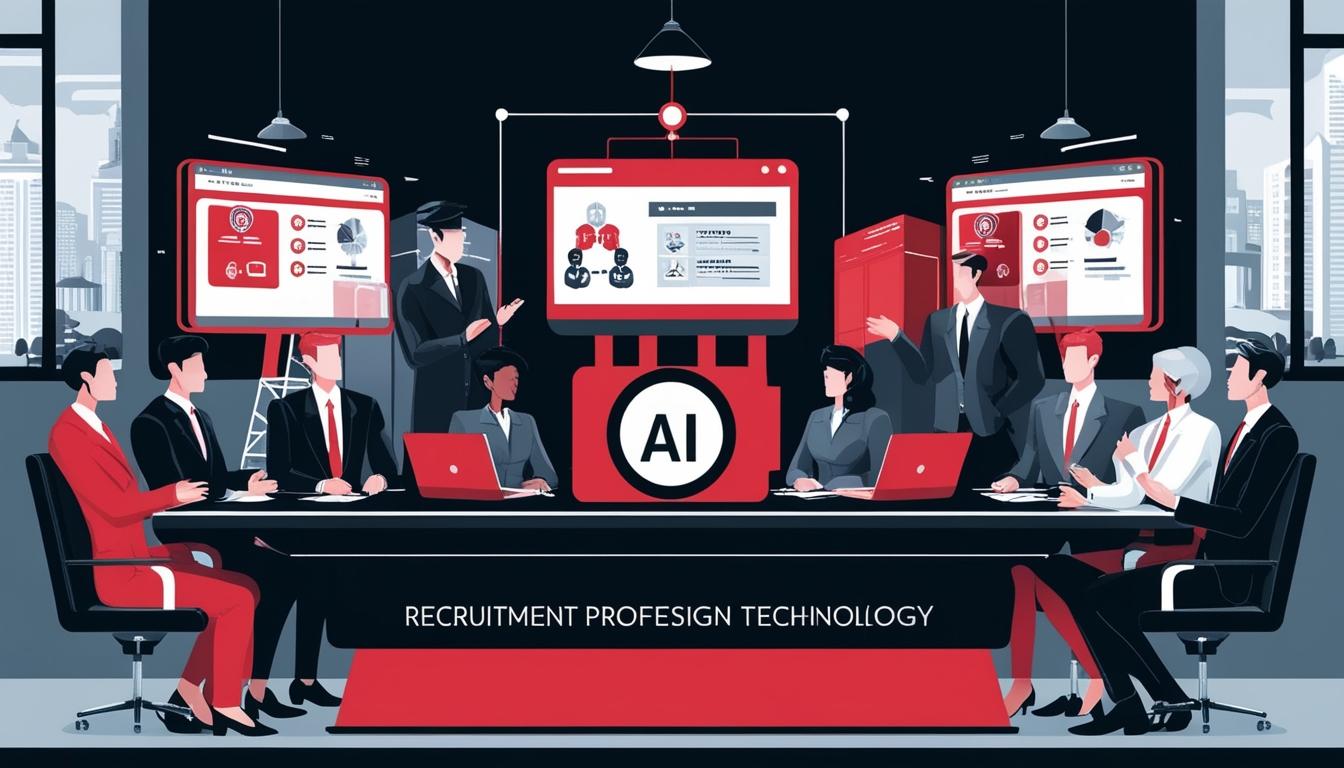
TALiNT Partners gathered industry experts at the Haymarket Hotel to discuss the impact of AI and automation on recruitment practices, highlighting strategies for enhancing efficiency and collaboration in the sector.
In a recent gathering held at the prestigious Haymarket Hotel in London, TALiNT Partners hosted a thought-provoking lunch and learn event that focused on the evolving landscape of recruitment technology, particularly the impact of AI, automation, and talent intelligence on business practices. The event, executed in collaboration with Mercury, SourceWhale, and Jove Insurance, brought together experts and professionals from the recruitment sector to discuss strategies for enhancing recruiter efficiency, data management, and cross-department collaboration.
Managing Director of TALiNT Partners, Alex Evans, opened the session by addressing current workforce trends and uncertainties affecting hiring decisions, especially in anticipation of impending budget announcements. He emphasised a shift towards internal mobility as companies increasingly encounter the need for agile workforce solutions, which has amplified the significance of the growing freelance market, currently comprising 1.6 billion of the 3.3 billion employed individuals globally. Evans pointed to upcoming changes in government policies, specifically the increase in Employers National Insurance contributions and the revised threshold, which would compel employers to leverage HR and recruitment technologies more intensively to manage employment costs.
The first panel engaged in discussions about optimising technology and data strategies within sales and marketing for recruitment firms. Scott McKenzie, the Group Strategy Director at SThree, detailed his company’s transition from Salesforce to a Microsoft-based framework with Mercury. This strategic shift aimed to fortify data-led decision-making by standardising taxonomies to enhance data tracking and analytics through tools like Power BI. He noted several key performance indicators for assessing the effectiveness of these technological integrations, such as time to productivity and staff retention.
McKenzie also addressed the nuanced impacts of AI in recruitment, cautioning against the prevalent misconception that the benefits are immediately realised. He suggested that while AI can reduce mundane tasks, allowing consultants more time for in-depth client interactions, it has faced varying degrees of acceptance among different experience levels within the workforce.

Stuart Johnson, Head of Sales at Mercury, underscored the importance of aligning technology with daily operations and overarching business strategies. The necessity for early engagement from both sales and marketing teams during technology adoption was highlighted by Jenny Wood, Global Head of Marketing at Salt, who pointed out that early collaboration fosters greater acceptance and understanding of new tools. She also advocated for personalised outreach strategies, positing that quality interactions enhanced by AI insights could distinguish recruiters in a crowded marketplace.
The second panel addressed how technological solutions and strategic partnerships could unlock new business opportunities amid growing demand for contractor services, including international expansion. Amanda Cai, CEO of Jove Insurance, articulated how AI is reshaping compliance processes, enabling faster contractor and supplier validation. Her firm’s borderless insurance solutions are designed to facilitate the onboarding of remote workers and contractors on a global scale.
James Ockelford, Managing Director at Engage Partners, shared his experience in developing an in-house scheduling platform that reduces operational friction and expedites candidate placement. He noted the critical nature of compliance in recruitment workflows, explaining that managing compliance internally positions Engage as a trusted partner capable of responding swiftly to client needs.
Egle Williams, Head of Strategic Change and Operations at Hydrogen Group, cited the rising demand for scalable contract solutions as a driver for tech transformation in recruitment. She emphasised the evolving roles of recruitment managers not just as hiring professionals but as change leaders guiding organisations through tech optimisation. Williams advocated for ongoing communication regarding technology roadmaps to ensure all teams remain aligned.
Wrapping up the event, Alex Evans reiterated the promising capabilities of AI as a tool that empowers recruitment firms while maintaining a personal touch. He cautioned against the temptation to allow technology to homogenise services, insisting that the ultimate goal should be enhancing the unique client and candidate experiences that consultants provide. By ensuring that AI contributes to personalised and efficient communication, organisations may find themselves positioning consultants as valued strategic advisors rather than mere facilitators in the hiring process.
Source: Noah Wire Services
- https://itselecta.com/ai-in-recruitment/ – Discusses the impact of AI on recruitment, including automating tasks, reducing routine work, and enhancing candidate selection and experience.
- https://www.workast.com/blog/revolutionizing-tech-recruitment-the-impact-of-ai-in-2024/ – Explains how AI is transforming tech recruitment by automating tasks, streamlining processes, and providing data-driven insights, while also highlighting the importance of human judgment.
- https://leoforce.com/reports/the-future-of-ai-in-recruitment-2024-report/ – Provides insights from a comprehensive report on the future of AI in recruitment, including current adoption, benefits, and challenges of AI-driven recruiting technology.
- https://www.kornferry.com/insights/featured-topics/talent-recruitment/ai-in-recruiting-navigating-trends-for-2024 – Details the pros and cons of AI in recruitment, including its ability to reduce administrative tasks, mitigate bias, and enhance the candidate experience.
- https://www.smartrecruiters.com/blog/44-recruitment-statistics-on-ai-for-2024/ – Offers statistics on AI adoption in recruitment, including its use in sourcing, engaging talent, and analyzing recruitment data, as well as barriers to its adoption.
- https://itselecta.com/ai-in-recruitment/ – Supports the idea that AI can reduce mundane tasks and allow recruiters more time for in-depth client interactions, aligning with Scott McKenzie’s points.
- https://www.workast.com/blog/revolutionizing-tech-recruitment-the-impact-of-ai-in-2024/ – Corroborates the importance of aligning technology with daily operations and business strategies, as highlighted by Stuart Johnson and Jenny Wood.
- https://leoforce.com/reports/the-future-of-ai-in-recruitment-2024-report/ – Supports the growing demand for contractor services and the role of AI in reshaping compliance processes, as discussed by Amanda Cai.
- https://www.kornferry.com/insights/featured-topics/talent-recruitment/ai-in-recruiting-navigating-trends-for-2024 – Highlights the critical nature of compliance in recruitment workflows and the need for technology to manage compliance efficiently, as noted by James Ockelford.
- https://www.smartrecruiters.com/blog/44-recruitment-statistics-on-ai-for-2024/ – Supports the evolving roles of recruitment managers as change leaders guiding organizations through tech optimization, as mentioned by Egle Williams.
- https://www.workast.com/blog/revolutionizing-tech-recruitment-the-impact-of-ai-in-2024/ – Emphasizes the importance of ensuring AI contributes to personalized and efficient communication, aligning with Alex Evans’ final remarks.







