






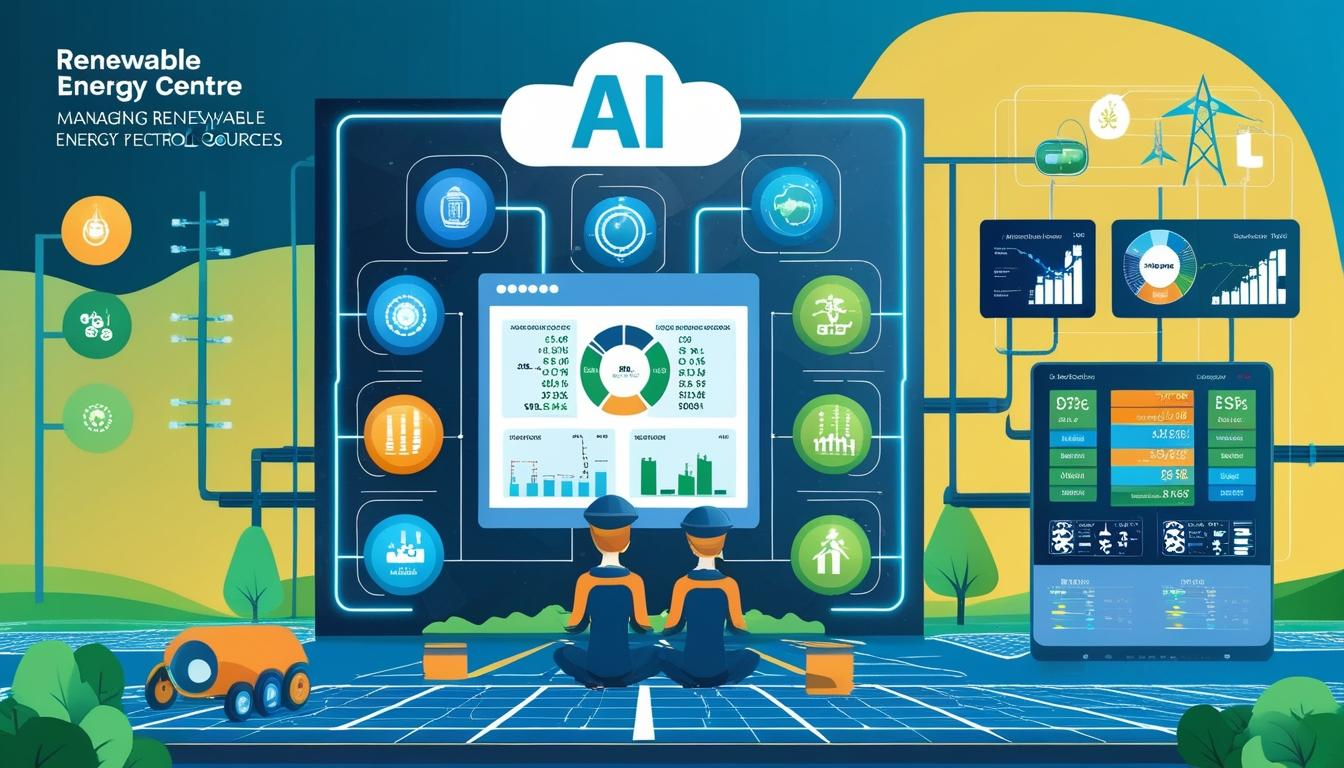

As the UK invests in AI for its decarbonisation strategies, new technologies promise significant advancements in energy efficiency and the integration of renewables into the national grid.
Artificial Intelligence (AI) is emerging as a pivotal force in the clean energy sector within the United Kingdom, promising significant advancements in energy efficiency and renewable integration. Tim Ballard, Head of Product (New & Aftermarket) at Finning UK & Ireland, outlines the transformative impact of AI technologies on the energy landscape. This development comes in light of the UK’s ambitious £1.73 million Artificial Intelligence for Decarbonisation Innovation Programme, which is spearheading efforts to integrate AI into energy strategies.
AI’s capacity for intensive real-time data analysis presents a promising avenue for the energy sector. By developing sophisticated algorithms, AI can process vast datasets on energy consumption to identify inefficiencies that might not be detectable through traditional means. This capability extends from industrial applications to domestic settings, where AI-powered systems optimize heating, ventilation, and air conditioning, ensuring substantial energy savings without compromising on comfort.
Beyond energy efficiency, AI is instrumental in facilitating the seamless integration of renewable energy sources like solar and wind into the national grid. The inherent variability of these energy sources poses challenges in grid management; however, AI’s ability to analyse weather patterns and historical energy data lends it the predictive power necessary to forecast renewable energy production accurately. This foresight allows energy operators to plan effectively, ensuring renewable energies are incorporated into the grid smoothly and reliably.
Maintaining grid stability—especially with the growing diversity of energy sources and decentralised generation—remains a top priority. AI offers significant enhancements in grid management by forecasting demand fluctuations, identifying potential failures, and optimizing the distribution of energy resources. Through real-time data sourced from smart meters and sensors, AI enables grid operators to balance supply and demand, mitigate the risk of outages, and maintain a continuous energy supply. It also optimizes energy storage systems by managing their charging and discharging cycles to improve efficiency and stability.

Despite its potential, the widespread adoption of AI in the energy sector is contingent on overcoming several challenges. The reliability of AI hinges on high-quality data; poor data quality undermines algorithm accuracy, affecting performance. Security and data privacy also play crucial roles in facilitating secure data exchanges among entities. Moreover, the interoperability of various systems requires substantial infrastructural upgrades and software development investments. Addressing these issues through strategic investments and an emphasis on transparency and accountability will be critical to unlocking AI’s full potential in the energy domain.
The UK’s commitment to integrating AI into its decarbonisation strategies marks a step towards a more sustainable energy landscape. By harnessing AI, the nation can move towards a cleaner, smarter energy future, enhancing efficiency, integrating renewables more robustly, and ensuring a stable energy supply. While AI in the energy sector continues to evolve, its role in driving towards a greener future appears indispensable, showcasing a future that is both green and increasingly reliant on intelligent technology.
Source: Noah Wire Services
More on this & sources
- https://www.fdmgroup.com/news-insights/ai-in-energy-sector/ – This article explains how AI is used in the energy sector, including predictive maintenance, renewable energy forecasting, and optimizing energy storage, which supports the claims about AI’s role in energy efficiency and renewable integration.
- https://www.techuk.org/resource/renewable-energy-and-ai-the-dynamic-duo-saving-the-world-one-watt-at-a-time.html – This resource details the benefits of AI in renewable energy production, such as forecasting and optimizing energy generation, which aligns with the article’s points on AI’s predictive power and grid management.
- https://www.renewableenergymagazine.com/panorama/ai-and-renewable-energy-a-complex-but-20240923 – This article discusses how AI is crucial for overcoming the intermittency of renewable energy sources and optimizing energy storage, supporting the claims about AI’s role in grid stability and renewable energy integration.
- https://tech.eu/2024/09/11/uks-tem-secures-ps105m-for-ai-powered-renewable-energy-platform/ – This article highlights how AI is used to match businesses with renewable energy generators in real-time, optimizing energy supply and demand, which corroborates the article’s points on AI’s role in energy efficiency and renewable integration.
- https://atomico.com/insights/our-investment-in-tem – This article explains how AI is used to democratize access to renewable energy, bypassing the wholesale market and optimizing energy transactions, supporting the claims about AI’s impact on energy efficiency and renewable adoption.
- https://www.fdmgroup.com/news-insights/ai-in-energy-sector/ – This article discusses AI’s role in smart homes and buildings, optimizing heating, ventilation, and air conditioning, which supports the claims about AI’s impact on domestic energy efficiency.
- https://www.techuk.org/resource/renewable-energy-and-ai-the-dynamic-duo-saving-the-world-one-watt-at-a-time.html – This resource mentions the importance of AI in optimizing energy production and distribution, which aligns with the article’s points on AI’s role in grid management and stability.
- https://www.renewableenergymagazine.com/panorama/ai-and-renewable-energy-a-complex-but-20240923 – This article addresses the challenges and benefits of AI in the energy sector, including data quality and security, which supports the article’s discussion on the contingent factors for AI adoption.
- https://tech.eu/2024/09/11/uks-tem-secures-ps105m-for-ai-powered-renewable-energy-platform/ – This article highlights the UK’s commitment to clean energy and how AI is integral to this transition, supporting the claims about the UK’s decarbonisation strategies and AI integration.
- https://atomico.com/insights/our-investment-in-tem – This article discusses the future potential of AI in the energy sector, including its role in driving a greener future, which aligns with the article’s conclusion on AI’s indispensable role in a sustainable energy landscape.
- https://www.fdmgroup.com/news-insights/ai-in-energy-sector/ – This article outlines the future of AI in the energy industry, including its role in enhancing grid stability, reducing greenhouse gas emissions, and optimizing energy systems, supporting the article’s vision for a cleaner, smarter energy future.







