









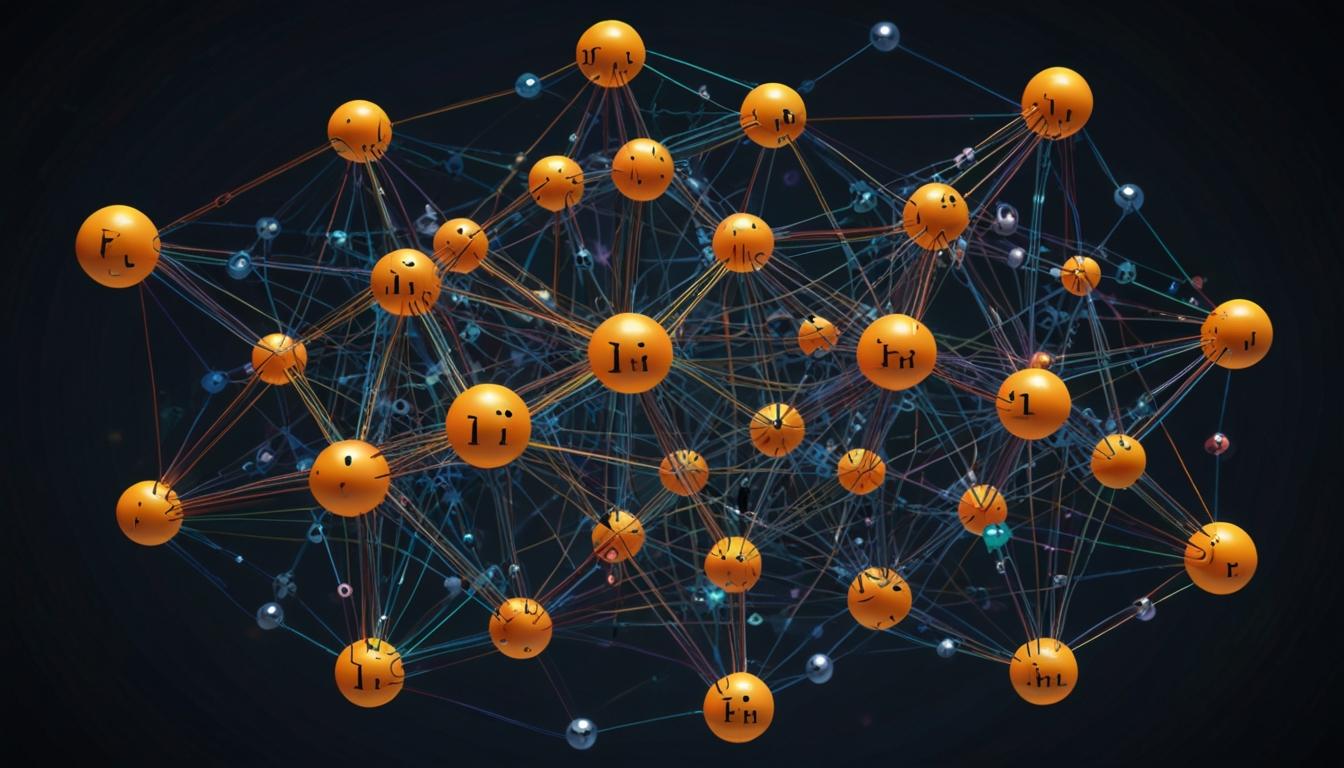
John J. Hopfield and Geoffrey E. Hinton receive the prestigious award for their significant contributions to the development of artificial neural networks, revolutionising modern AI technologies.
In a landmark announcement from Stockholm, the 2024 Nobel Prize in Physics has been awarded to John J. Hopfield from Princeton University and Geoffrey E. Hinton from the University of Toronto. The prize honours their pivotal contributions to the development of artificial neural networks, which form the backbone of modern artificial intelligence technologies. Their work has revolutionised the way computing systems learn and process information, a feat that the Nobel Committee lauded for its profound impact both within and beyond the realm of physical sciences.
Artificial neural networks are complex systems modelled after the human brain’s structure. They consist of layers of interconnected nodes (or “neurons”) that influence each other through adjustable connections. This technology enables modern AI to “learn” from data, enhancing its ability to perform tasks such as recognising patterns, processing images, and executing linguistic commands. These capabilities form the foundation of advanced AI applications like ChatGPT and myriad other systems widely used today in industries ranging from communication to entertainment and engineering.
John Hopfield’s contributions lie in developing methods for neural networks that allow AI to store and recall patterns, a significant step in the technology’s evolution. Meanwhile, Geoffrey Hinton’s work focused on methods enabling AI to discern and utilise features within data effectively, improving its ability to identify and process specific elements within complex datasets.
The Royal Swedish Academy of Sciences, responsible for the awarding of the Nobel Prizes, articulated that these groundbreaking advances have opened new pathways for addressing many of the contemporary challenges faced by society. In a formal announcement shared on X (formerly Twitter), the committee highlighted the crucial role of physics in these developments. They emphasised how utilizing principles of physical science has propelled machine learning techniques to the forefront of scientific innovation.
The prize, which includes a monetary award of 11 million Swedish kronor (approximately £810,000), underscores the importance of interdisciplinary collaboration in scientific research. The celebrated work of Hopfield and Hinton not only demonstrates the fusion of physics and computer science but also exemplifies how such synergy can lead to significant technological breakthroughs with widespread societal impact.
This year’s award comes amid a series of Nobel accolades, with the physics honour following closely on the heels of awards in medicine. Just a day prior, American scientists Victor Ambros and Gary Ruvkun were distinguished for their discovery in the field of microRNA. The Nobel festivities will continue with forthcoming announcements in chemistry, literature, peace, and economics over the approaching days.
The Nobel Prize in Physics has been awarded 117 times since its inception, highlighting the profound contributions to scientific advancement made by individuals and teams across the globe. The laureates of the 2024 award will officially receive their honours during the Nobel ceremony on December 10, coinciding with the death anniversary of Alfred Nobel, the prize’s originator.
Source: Noah Wire Services






